
Bakeries in Indiana typically need general liability with strong products coverage for allergen and labeling claims, commercial property with equipment breakdown for ovens and mixers, spoilage and business income coverage, and workers’ compensation. If you deliver wedding cakes or wholesale orders, add commercial auto or hired and non-owned auto. Indiana requires comp for covered employers with no minimum headcount in the statute.
This page is for retail bakeries, cake studios, bread bakeries selling wholesale to cafes and grocers, and bakery-cafes across Indiana. A bakery’s biggest exposures often show up after the product leaves the building, in a customer’s kitchen, at a reception hall or on a grocery shelf, so the policy needs to follow the product as well as the premises.
State and county rules behind an Indiana bakery’s policy
Bakeries are retail food establishments under the Indiana Food Code (410 IAC 7-24), permitted and inspected by local county health departments working with the Indiana Department of Health’s Food Protection Program. Indiana law (IC 16-42-5.2) requires a certified food protection manager responsible for all hours of operation at establishments that cook raw animal foods, while limited-prep operations are exempt. Whether a bakery falls in depends on the menu, so a shop turning out quiche and breakfast sandwiches should confirm its status with the county. Certificates renew every five years, and a departing manager must be replaced within three months.
Workers’ comp is required for covered employers under IC 22-3-5-1, and there is no statutory employee-count threshold. Delivery vehicles must carry Indiana’s minimum liability of 25/50/25 (in thousands of dollars), which is low for a van working city traffic every morning. Wholesale customers, especially grocers, commonly require vendors to carry products liability and name them as additional insureds, and they may specify limits in the vendor agreement.
Oven, mixer and allergen risks in a bakery
A child with a tree-nut allergy eats a birthday cupcake that was supposed to be nut-free but shared a piping bag with a praline batch. That single mix-up can produce a severe allergic reaction, an emergency room visit and a products liability claim. Wholesale adds labeling exposure: if a label on your cookies sold through a grocer omits an allergen, the grocer will tender the claim straight back to you.
Inside the kitchen, spiral and planetary mixers cause some of the most serious hand injuries in food service when guards are bypassed or a bowl is cleaned while the unit is energized. Deck and rack ovens cause burns, and the pre-dawn production schedule means tired staff moving heavy sheet racks. Flour dust is an ongoing housekeeping and ignition concern around ovens and electrical panels.
On the customer side, a three-tier wedding cake slides in the van on the way to a venue and arrives damaged hours before the reception, or a delivery driver trips carrying it through a service entrance and injures a venue employee. A deck oven failure on the Wednesday before Thanksgiving can wipe out your busiest week of the year.
Bakery insurance checklist
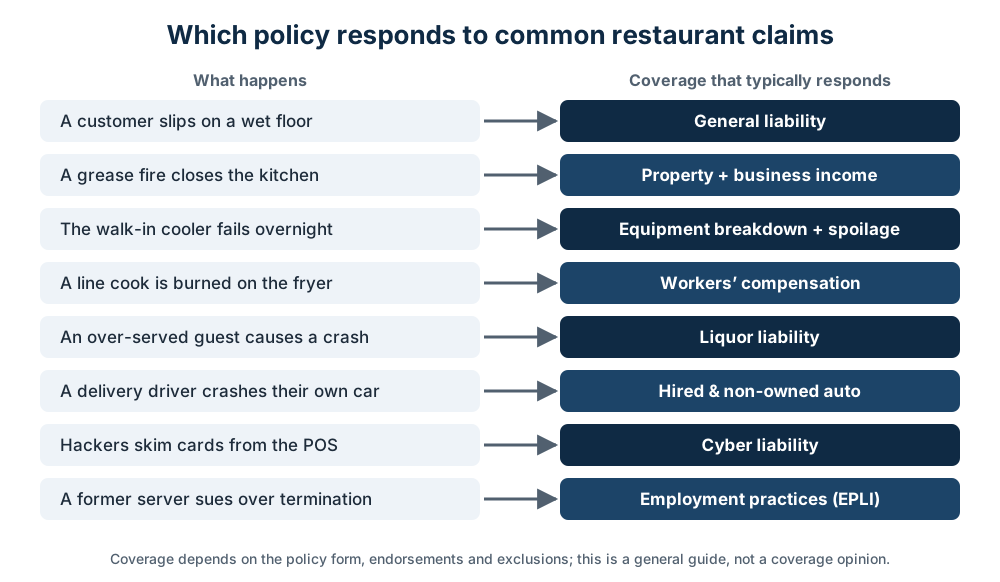
- General liability — customer slips in the shop and injuries during deliveries to venues.
- Products liability — allergen reactions, foreign objects and labeling errors on retail and wholesale goods.
- Commercial property — ovens, mixers, sheeters, display cases, build-out and ingredients.
- Equipment breakdown — oven controls, compressors and electrical failures that property forms exclude.
- Spoilage — buttercream, cream fillings and dairy lost when refrigeration fails.
- Business income — revenue lost during a shutdown after a covered fire or breakdown, especially around holidays.
- Commercial auto or hired and non-owned auto — cake deliveries and wholesale routes.
- Workers’ compensation — mixer injuries, burns and back strains from lifting flour sacks.
- Product recall expense — pulling mislabeled product from grocery accounts.
How carriers size up a bakery
Underwriters weigh retail versus wholesale sales, the number and type of wholesale accounts, whether you ship beyond Indiana, delivery volume, fryer use for doughnuts, fire suppression over cooking lines, building construction and age, and claims history. A bakery with a doughnut fryer and a big grocery wholesale book rates differently from a cake studio taking custom orders.
Pricing improves with documented allergen controls such as separate utensils and color-coded tools, label review before wholesale shipments, mixer guarding and lockout procedures, oven maintenance records, and driver screening for anyone delivering. Clear vendor agreements that cap your indemnity obligations to grocers also reduce the exposure you carry.
Comparing bakery quotes side by side
Provident Financial Group is an independent agency. You fill out one application and we compare quotes from multiple carriers side by side, calling out differences in products limits, spoilage and equipment breakdown. Once bound, we issue live certificates of insurance for landlords, wholesale accounts and wedding venues. Call (866) 964-6660 with questions.
Frequently asked questions
Does my bakery need products liability if I only sell retail?
Yes. Anything a customer takes home and eats can lead to an allergen or foreign-object claim, and products coverage within general liability is what responds.
Who pays if a wedding cake is ruined in my van?
Damage to the cake itself is usually a business loss rather than a liability claim, though some inland marine or property forms can address goods in transit. Injuries or venue damage during delivery fall under liability coverage.
Are grocery wholesale accounts going to ask for insurance?
Almost always. Expect vendor agreements requiring products liability, additional insured status and specific limits before your goods go on the shelf.
Is flour dust something my insurer cares about?
It can be. Underwriters and loss-control inspectors look at housekeeping, dust accumulation and electrical equipment near production areas.
Baking in Indiana? Get Multiple Quotes within minutes. Or call (866) 964-6660.