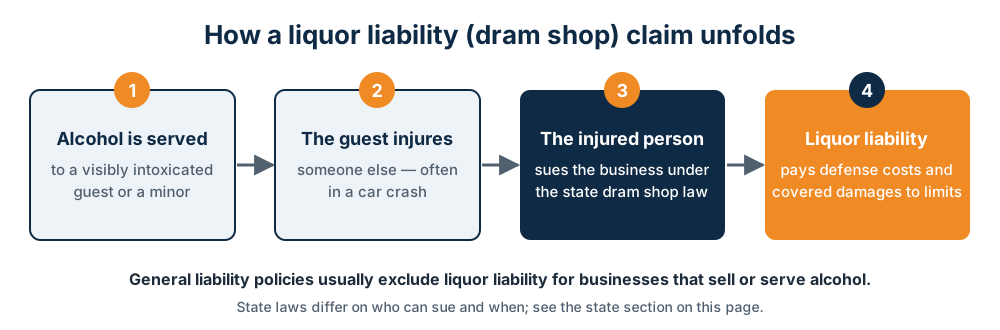
If your restaurant or bar serves alcohol, you’re carrying a kind of risk that general liability insurance was never built to handle on its own. A customer who has one too many and causes a crash on the way home, a fight that breaks out after last call, a guest who’s served well past the point they should have been cut off — these situations can lead to lawsuits against the business that poured the drinks, not just the person who drank them. That’s where liquor liability insurance typically comes in, and for many restaurant and bar owners, it’s one of the most important coverages they don’t fully understand until they need it.
What Liquor Liability Insurance Actually Covers
Liquor liability insurance is typically built to respond when your business is accused of over-serving a guest who then causes harm to themselves or someone else. That might mean a car accident after a customer leaves your bar, a physical altercation involving an intoxicated patron, or an injury that happens on your premises because someone had too much to drink. Standard general liability policies often specifically exclude these alcohol-related claims, which is why liquor liability is usually sold as its own policy or endorsement rather than bundled automatically into a business owner’s policy.
Dram Shop Laws: Why Serving Alcohol Creates Legal Exposure
Most states have some version of what’s known as a dram shop law, which can hold businesses that sell or serve alcohol responsible for damages caused by a visibly intoxicated patron. The specifics vary significantly by state — some states have fairly broad dram shop liability, others limit it narrowly, and a handful don’t recognize it at all outside of serving minors. The common thread is that in many states, simply having poured the drinks is not an automatic legal shield. If staff serve someone who is clearly over-served and that person later causes an injury, the business may be named in the resulting lawsuit regardless of the specifics of the state’s dram shop statute, because the claim often also gets framed as ordinary negligence.
Who Needs This Coverage (and Who’s Often Surprised They Do)
Full-service bars and nightclubs are the obvious candidates, but liquor liability exposure isn’t limited to businesses whose primary product is alcohol. Restaurants that serve beer and wine with dinner, breweries and taprooms, event venues that host weddings with an open bar, caterers who provide bartending services, and even hotels with a lobby bar can all carry this exposure. A common misconception is that if alcohol sales make up a small percentage of total revenue, the liability exposure is proportionally small too — but a single incident involving an intoxicated guest doesn’t care what percentage of receipts came from drinks.
How Liquor Liability Fits With Your General Liability Policy
Because standard general liability policies typically carve out alcohol-related claims, liquor liability is usually added as a separate endorsement or purchased as its own standalone policy, often priced based on alcohol sales volume. It’s worth confirming with your agent exactly how your current policy treats alcohol-related incidents, since assuming coverage exists under a general liability policy that actually excludes this exposure is one of the more expensive mistakes an owner can make. Many umbrella and excess liability policies also follow the underlying liquor liability policy, so a gap at the primary level can mean a gap in excess coverage too.
Steps That Can Help Limit Your Exposure
Insurance is one part of managing this risk, but it typically works best alongside good operational practices. Training staff in responsible beverage service — recognizing the signs of intoxication, knowing when and how to refuse service, and having a documented process for cutting someone off — can both reduce incidents and, in many states, support a stronger defense if a claim is filed. Some carriers offer premium credits for completing recognized responsible-service training programs, so it’s worth asking your agent whether that applies to your policy.
Liquor liability is one of those coverages that’s easy to overlook until the moment you actually need it, and the right structure often depends on your state’s dram shop rules, your alcohol sales volume, and how your other policies are written. An independent agent can review what you currently have in place and help make sure a night of serving drinks doesn’t turn into a gap in your coverage.