
Restaurants in Wilmington, Delaware typically need general liability, property and business income, liquor liability, workers’ compensation and auto coverage for any delivery or catering driving. The Delaware rule that matters most is workers’ comp: it is required from the first employee, and an uninsured employer owes a civil penalty of three times the premium it should have paid, plus daily fines after notice.
This page covers downtown lunch spots, riverfront dining rooms, neighborhood bars, bakeries and caterers in Wilmington and the nearby New Castle County suburbs.
Wilmington’s dining profile and what it means for coverage
Wilmington is Delaware’s largest city and a corporate and financial center on the I-95 corridor between Philadelphia and Baltimore. Weekday business lunches, client dinners and office catering are a big part of local revenue, which means off-premises exposure: catering deliveries, set-ups in office buildings and events at rented venues that will ask for certificates naming them as additional insureds. Riverfront dining adds seasonal patio crowds.
Delaware’s property risks include hurricanes and tropical storms, nor’easters, winter storms and coastal and riverine flooding. Riverfront and low-lying locations should weigh flood coverage, and every restaurant should consider power-outage and spoilage protection given the storm season.
Delaware rules for Wilmington restaurants
Alcohol and training. Licensing runs through the Office of the Delaware Alcoholic Beverage Control Commissioner, with enforcement by the Division of Alcohol and Tobacco Enforcement. Server training is mandatory: employees who sell, serve or dispense alcohol, and their managers, must complete state-approved Responsible Alcoholic Beverage Server Training (4 Del. C. § 1203), and certification lasts two years (§ 1205). The Commissioner can fine licensees and bar untrained employees, so track renewal dates for every server.
Dram shop. In McCall v. Villa Pizza, Inc. (1994), the Delaware Supreme Court held there is no statutory or common-law cause of action against a tavern for off-premises injuries caused by an intoxicated patron. Third-party liquor claims are more limited than in neighboring Pennsylvania, but they still generate defense costs, and landlords and lenders often require liquor liability anyway.
BYOB. A for-profit establishment may not let guests bring their own alcohol to drink on site without first getting a Bottle Club license, so check before advertising BYOB.
Workers’ comp, food safety and vehicles. Coverage is required with one or more employees (19 Del. C. § 2306), though up to eight stockholder-officers or LLC members may be exempted by written agreement. The Division of Public Health’s Office of Food Protection issues permits statewide and requires a Certified Food Protection Manager for most establishments. Business vehicles must carry at least 25/50/10 liability (in thousands of dollars) plus mandatory Personal Injury Protection.
Typical Wilmington restaurant losses
- A caterer’s employee drops a chafing dish at a corporate event, and a hot-water spill burns a guest.
- A server’s two-year training certificate lapses, and the lapse surfaces during an enforcement visit.
- A delivery driver using a personal car is in a collision near downtown, and the injured party names the restaurant.
- A nor’easter cuts power for a day, spoiling inventory and cancelling a booked private event.
Wilmington coverage checklist
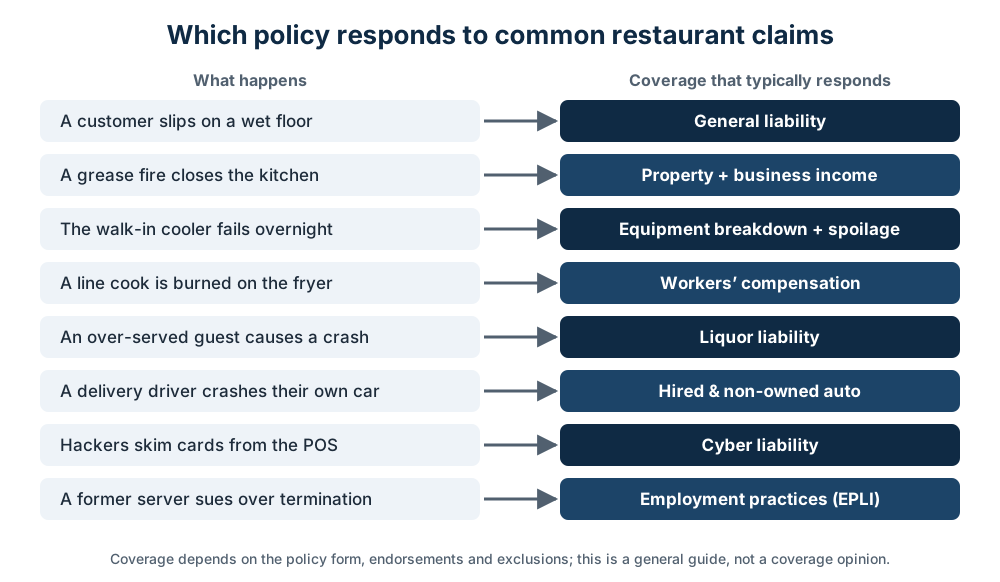
- General liability — for guest injuries at your location and at client offices or rented venues.
- Liquor liability — defends alcohol claims and meets lease or lender requirements.
- Commercial property — protects equipment, stock and build-out.
- Business income and spoilage — for storm-related closures and lost inventory.
- Workers’ compensation — mandatory from the first employee.
- Commercial auto or hired and non-owned auto — for catering vans and staff-driven deliveries, with PIP as required.
- Employment practices liability — for disputes involving front- and back-of-house staff.
What changes the price in Wilmington
Carriers consider catering and off-site revenue, alcohol share of sales, hours, building details, sprinklers and hood suppression, payroll by Delaware Compensation Rating Bureau classification (Delaware uses its own system rather than NCCI’s), vehicle use and loss history. Current server certifications, driver record checks, generator or backup power plans and clean kitchen maintenance records all help your application.
Our quote process
Provident Financial Group is an independent agency. One application lets us compare multiple carriers side by side, and we issue live certificates of insurance that you can share with building managers, event venues and corporate clients. Call (866) 964-6660 to get started. Coverage is subject to underwriting and policy terms.
Frequently asked questions
Can my Wilmington restaurant allow BYOB?
Not without a Bottle Club license if you are a for-profit business. Talk to the Commissioner’s office first, then make sure your liability program reflects alcohol on premises.
How often do my servers need training?
Delaware server training certification is valid for two years, so each server and manager must renew on schedule.
Is liquor liability needed if Delaware has no dram shop claim?
In most cases, yes. Defense costs and on-premises incidents remain, and many leases and lenders require it.
Do corporate catering clients ask for certificates?
Frequently. We issue certificates naming the client or venue as additional insured, usually the same day you request them.
See what your Wilmington restaurant qualifies for. Get Multiple Quotes within minutes.