
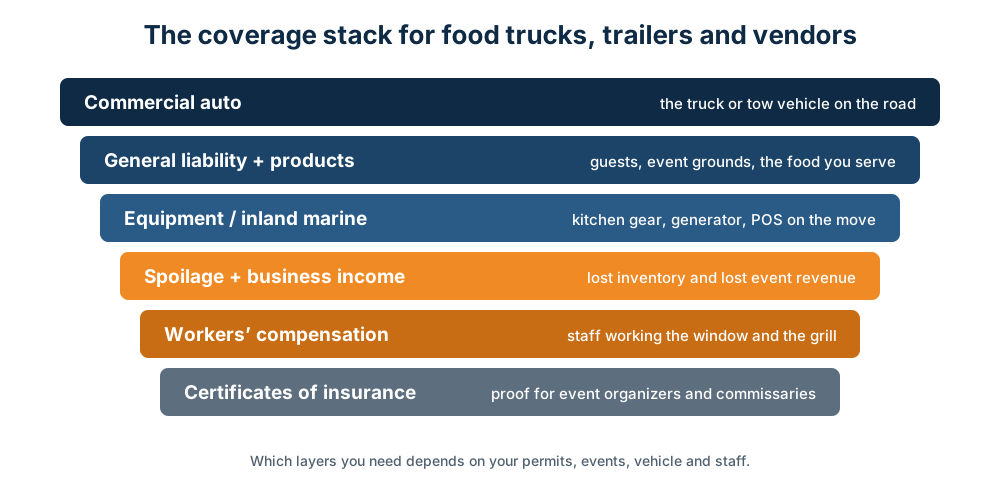
Food vendors and farmers market sellers in Kansas typically need general liability with products-completed operations coverage, inland marine protection for tents, coolers and cooking gear, commercial auto that meets the 25/50/25 minimum (in thousands of dollars) plus PIP and UM/UIM for the vehicle that hauls it all, and workers’ compensation once gross annual payroll passes $20,000. Most markets require a certificate naming them as additional insured.
This page is for booth and pop-up vendors across Kansas: the kettle corn stand at a county fair, a tamale seller at a Saturday market in Topeka, a barbecue vendor working festivals in Dodge City, or a jam and baked goods table that sets up at three markets a week. Your business moves every weekend, and your insurance has to travel with it.
KDA licensing and market requirements for Kansas vendors
The Kansas Department of Agriculture’s Food Safety & Lodging program issues food establishment licenses that cover special events and mobile food units, in addition to fixed restaurants. Vendors operating from a truck, trailer or cart must submit a Mobile Unit Log with the application, and mobile units need a water supply, wastewater disposal and a handwashing sink. KDA recommends a certified food protection manager but does not require one statewide. Local health departments and individual markets often layer on their own rules, so check with each organizer before the season starts.
The requirement you will run into most often is contractual. Farmers markets, fair boards and festival promoters routinely ask for general liability at specified limits and a certificate naming them as additional insured. Without it, you do not get a booth assignment.
If you employ help, Kansas requires workers’ compensation once gross annual payroll exceeds $20,000 in a calendar year, and the exemption does not apply to subcontractors. See our Kansas workers’ comp guide. For the van or pickup towing your gear, Kansas law requires 25/50/25 liability (in thousands of dollars) plus PIP and uninsured/underinsured motorist coverage.
Wind, tents and hot oil: vendor risks on the Kansas circuit
Kansas wind deserves its own line in your risk plan. A gust lifts a canopy that was weighted with two gallon jugs instead of proper sandbags, and the frame strikes a shopper in the next aisle. That is a general liability claim, and it is one of the most common ways vendors get sued. The same storm can shred the canopy and knock a display of product into the mud, which is a property loss your liability policy will not pay.
Cooking at events adds burn and fire exposure. A turkey leg vendor’s fryer tips when a child runs into the table leg, or a propane regulator leaks and scorches the booth next door. Your own help may be burned or cut while working in cramped quarters.
Then there is the product itself. Home-style salsas, cut fruit and meat products sold at an outdoor market face temperature control problems on a hot afternoon, and a customer who gets sick after the market has your business name on the label. Allergens matter too: an unlabeled pecan in a batch of cookies can lead to a serious claim.
Coverages that follow a vendor from market to market
- General liability — booth injuries, canopy accidents and damage to the venue, with additional insured wording for organizers.
- Products-completed operations — illness, allergen and foreign-object claims that show up after a customer leaves your booth.
- Inland marine or business personal property — tents, tables, coolers, generators and cooking equipment in transit and on site.
- Commercial auto — the vehicle and trailer that haul your setup, with Kansas-required PIP and UM/UIM.
- Spoilage — for vendors carrying significant refrigerated or frozen stock.
- Workers’ compensation — required once your payroll crosses the Kansas threshold.
- Liquor liability — only if you sell alcohol at events under your own license.
What vendors pay for, and how to pay less
Vendor pricing reflects annual sales, the kind of food you sell (cooked, raw, packaged or cut produce), whether you fry or use open flame, how many events you work and their size, the value of your equipment, vehicle and driver details, and past claims. Some vendors buy an annual policy; others buy event-specific coverage, and the right answer depends on how often you set up.
You can strengthen your application by using rated canopy weights at every leg, keeping propane and fryers behind a barrier, logging cold-holding temperatures, labeling allergens on everything you package, and keeping a folder of past certificates and market contracts so underwriters see a well-run operation.
Quoting market and event vendors with Provident Financial Group
We are an independent agency. Fill out one application and we compare several carriers side by side, including annual vendor programs that let you add organizers as additional insureds throughout the season. Certificates can be issued quickly once coverage is in force. Prefer to call? Reach us at (866) 964-6660.
Frequently asked questions
Do Kansas farmers markets require vendors to carry insurance?
Kansas law does not set a statewide requirement, but most markets and fairs require general liability and a certificate naming them as additional insured. Ask each organizer for their exact wording.
Is an annual policy better than one-day event coverage?
If you work more than a handful of events a year, an annual policy is usually simpler and lets you add organizers as needed. One-day coverage suits occasional vendors.
Does my liability policy cover my tent if the wind destroys it?
No. Liability covers injury and damage to others. Your own tent and equipment need inland marine or business personal property coverage.
Does my personal auto policy cover the van I use for markets?
Personal policies often restrict business use. If the vehicle is used mainly for your vending business, talk to us about commercial auto.
Booking your market season? Get Multiple Quotes within minutes.