
Fine dining restaurants in South Carolina typically need liquor liability that meets the state’s statutory minimum under S.C. Code 61-2-145, property coverage that properly values a wine collection and an often historic building, business income, employment practices liability, and workers’ compensation. Coastal locations also need a deliberate plan for hurricane wind, and valet or private events add their own coverage needs.
This page is for chef-driven and white-tablecloth restaurants, steak and seafood houses, and tasting-menu concepts in places like downtown Charleston, Greenville’s Main Street, Columbia’s Vista and the Grand Strand. Alcohol is often a large share of the check, and South Carolina changed the rules for alcohol licensees in 2026.
What South Carolina’s 2026 liquor reforms mean for a fine dining room
A business licensed for on-premises consumption that sells after 5 p.m. must carry liquor liability, or general liability with a liquor endorsement, with an annual aggregate of at least $1,000,000, a per-occurrence limit of at least 50 percent of that total, and SCDOR named as certificate holder. Letting that coverage lapse is grounds for suspension or revocation of your license.
Since January 1, 2026, a risk mitigation program allows reductions for businesses that, for example, close by midnight, have all servers trained, keep alcohol under 40 percent of sales or use forensic ID scanning, down to a $300,000 floor. Many fine dining rooms close well before midnight and train everyone, but a strong wine program can put alcohol above that sales threshold, so run the numbers before assuming a reduction. Remember that the statute sets a minimum; your exposure may justify more.
Server training is now mandatory: employees who serve alcohol at least 10 hours a week, and their managers, must complete an SCDOR-approved program, new hires within 30 days, with certificates kept on premises. Selling to a visibly intoxicated person is prohibited, and administrative penalties escalate from a $2,500 fine to a suspension of up to 14 days to revocation. The same reform lets fault be apportioned among the parties in alcohol cases, but where a DUI defendant is also found liable, the licensee is jointly and severally liable for 50 percent of actual damages. See our South Carolina liquor liability guide for more.
Exposures specific to a white-tablecloth restaurant
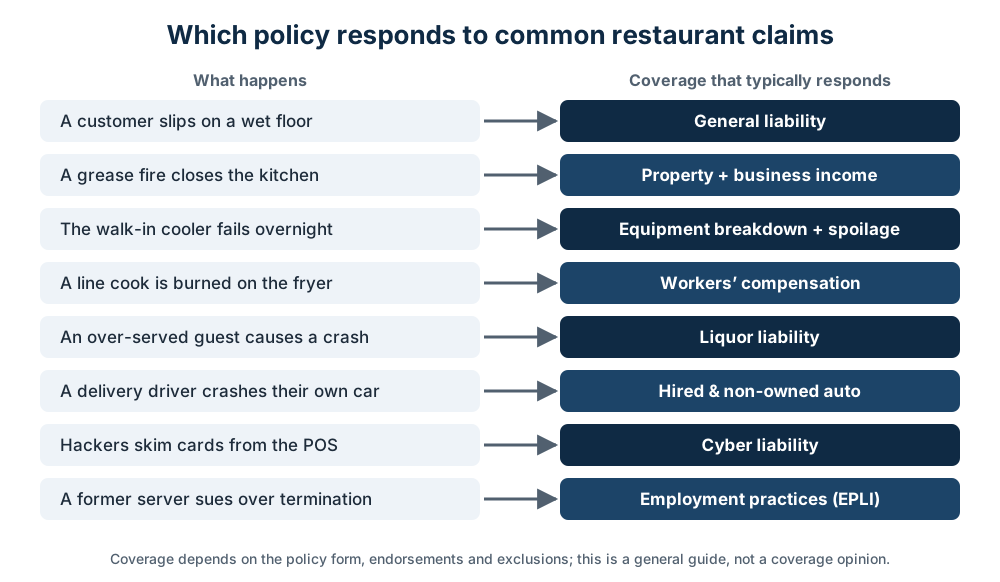
Picture a Saturday anniversary dinner on the Charleston peninsula. A couple shares a bottle and a half of wine plus after-dinner cognac, the husband drives home and hits a pedestrian on East Bay. Your liquor liability, your server’s training record and the new joint-and-several rule all come into play. Meanwhile, a tableside flambé flares and singes a guest’s sleeve, which is a general liability claim.
Property is where fine dining differs most. A wine cellar can hold more value than the kitchen equipment, and a failed cooling unit during a July heat wave can damage hundreds of bottles. Historic buildings bring older wiring, plaster and heart pine that cost more to restore, and local codes may force upgrades after a loss, which is what ordinance or law coverage addresses. Hurricane wind is its own conversation, since the South Carolina Wind and Hail Underwriting Association is the residual wind and hail market in Charleston, Beaufort, Horry, Georgetown and Colleton counties.
Service extras add risk: a valet scrapes a guest’s car against a garage column, a private buyout’s guest slips on a stair in a converted house, or a sous chef’s termination leads to a discrimination claim.
Coverage checklist for South Carolina fine dining
- Liquor liability — meets the 61-2-145 minimum with SCDOR as certificate holder; consider limits above the floor.
- General liability — covers guest falls, tableside burns and damage to guests’ belongings.
- Commercial property with agreed value for wine — insures the cellar, décor, kitchen and improvements at true replacement cost.
- Ordinance or law — pays code-required upgrades when rebuilding an older or historic building.
- Equipment breakdown and spoilage — responds to cellar cooling and walk-in failures.
- Business income — replaces lost revenue during a long restoration after a fire or storm.
- Garagekeepers or valet coverage — protects guests’ cars in your staff’s care.
- Employment practices liability — defends claims from front- and back-of-house staff.
- Umbrella — adds limits over liquor, general liability and auto for a high-exposure dining room.
How fine dining is underwritten
Carriers focus on alcohol as a percentage of sales, closing time, server training, whether you host bar-heavy events, seating capacity, building age and construction, sprinklers, alarm systems, coastal location and wind deductibles, wine inventory values, valet volume, and prior liquor and liability losses. Payroll by class drives workers’ comp.
Documented training, a written intoxication and cut-off policy, incident logs, cellar temperature alarms, and an updated appraisal of your wine collection all help. On the coast, hurricane shutters or impact glass and a realistic wind deductible can widen your options.
Quoting a fine dining program with Provident Financial Group
One application goes to multiple carriers quoted through our agency, and you see liquor, property and umbrella options side by side. We handle the SCDOR certificate once you bind and coordinate wind coverage where it is placed separately. Call (866) 964-6660 to review your current program.
Frequently asked questions
Will a strong wine program disqualify us from a reduced liquor limit?
Possibly. Keeping alcohol under 40 percent of sales is one mitigation factor, but it is not the only one; closing by midnight and full server training also count.
Is our wine collection covered at what we paid or what it is worth?
That depends on the valuation terms. Many restaurants schedule wine at agreed or selling value, so tell us how your inventory is valued.
Does restaurant insurance cover a valet accident?
Only if you carry valet or garagekeepers coverage. General liability usually excludes damage to guests’ vehicles in your care.
Do our sommeliers need the state server training?
Yes, if they serve alcohol for on-premises consumption at least 10 hours a week. Managers who supervise them must also be trained.
Ready to review your coverage? Get Multiple Quotes within minutes.