
Caterers in Connecticut typically need general liability with products coverage, liquor liability if they serve or sell alcohol at events, commercial or hired and non-owned auto for the vans hauling food and equipment, and workers’ compensation for every employee, including part-time event staff. Venues across the state also expect additional insured certificates before a caterer can load in.
This guide is for full-service and drop-off caterers, wedding and corporate event companies, and restaurants that run a catering arm. Catering is harder to insure than a fixed dining room because every event is a new location, crowd and contract. Start with our national catering insurance page, then use this page for the Connecticut specifics.
Connecticut’s Dram Shop Act and the caterer behind the bar
Connecticut’s Dram Shop Act, Conn. Gen. Stat. § 30-102, makes anyone who sells alcohol to an intoxicated person liable if that person then injures someone else or damages property. Damages are capped at $250,000 per injured person and $250,000 in the aggregate. The injured party must give the seller written notice within 120 days (180 days in cases of death or incapacity) and sue within one year. The statute creates no negligence claim for sales to people 21 or older, but common-law claims for wanton or reckless service fall outside the cap, so the statutory figure is not your maximum exposure.
State law does not require liquor liability insurance, but many venues, planners and corporate clients do. Server training is voluntary; the Department of Consumer Protection recognizes approved seller/server programs of at least five classroom hours. Since January 1, 2026, applicants and permittees on new liquor permit applications must also complete DCP’s free Liquor Law Education Program. Confirm with DCP which permit fits your service model, and see our Connecticut liquor liability page.
Vans, trailers and the 25/50/25 floor
Connecticut’s minimum auto liability limits are 25/50/25 (in thousands of dollars), and the state also requires uninsured/underinsured motorist coverage of at least 25/50 (in thousands). Those are a legal floor, not a recommendation: a loaded catering van that rear-ends a car on I-95 can produce injury claims well beyond them, and venues often ask for higher limits. If staff use their own cars to run chafing dishes to a wedding in Litchfield County, hired and non-owned auto protects the business when their personal policy falls short.
Event-day scenarios that turn into claims
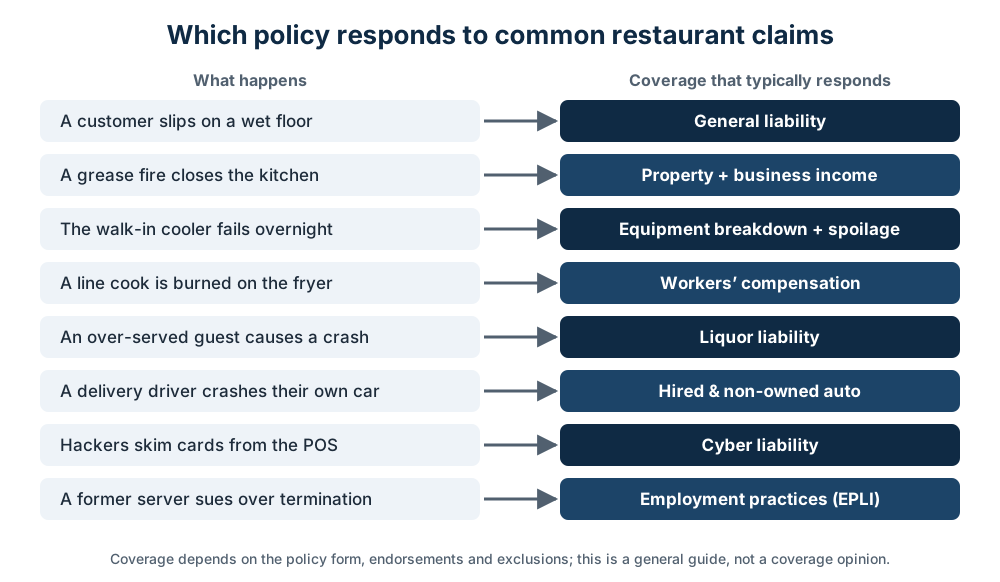
Think through a single Saturday. A server carrying sterno-heated trays trips on a venue’s loose rug and a guest is burned. A guest with a shellfish allergy eats a crab cake that was supposed to be labeled. A cooler at an outdoor tent reception in late July cannot keep chicken salad cold and several guests report illness the next day. A bartender keeps pouring for a groomsman who later drives off from a Mystic venue. Each lands on a different coverage, and the venue will be named alongside you.
Your people and gear are exposed too. Staff lift heavy hotel pans in and out of vans, cut themselves in a borrowed kitchen, or slip on a wet loading dock. Warmers, induction burners, linens and china can be stolen from a parked trailer or damaged in transit, and a standard property policy may only cover them at your address.
Coverage lineup for a Connecticut catering company
- General liability — covers guest injuries and damage to a venue’s floors or fixtures during setup and service.
- Products-completed operations — responds when food you prepared causes illness after it is served off-site.
- Liquor liability — needed if you sell or serve alcohol; host liquor coverage alone may not fit a caterer paid to pour.
- Commercial auto — protects owned vans and box trucks and can be written above the state minimums.
- Hired and non-owned auto — covers the business when employees drive personal or rented vehicles for events.
- Inland marine or equipment floater — covers warmers, tents, china and bar gear in transit or at a venue.
- Workers’ compensation — required for every Connecticut employer, including seasonal event crews.
- Umbrella liability — adds limits above liability, auto and liquor when clients require more.
- Employment practices liability — helps with harassment or wage-and-hour claims common with rotating event staff.
Pricing factors carriers weigh for caterers
Underwriters look at revenue split between food and alcohol, the number and size of events, whether you cook on-site with open flame or only reheat, how many vehicles you run and who drives them, and whether your own bartenders pour. Loss history and years in business matter heavily.
Practical steps help: keep driver records clean and set driving rules, document server training and cut-off policies, use contracts that spell out who handles alcohol, log food temperatures at every event, and keep an equipment schedule with serial numbers.
One application, several carriers, fast certificates
Because Provident Financial Group is an independent agency, you complete one application and we compare multiple carriers side by side. When a venue asks for a certificate naming it as additional insured, we turn it around quickly so the event is not held up. Call (866) 964-6660. Coverage is subject to underwriting and policy terms. See also our Connecticut restaurant insurance hub and Connecticut restaurant workers’ compensation page.
Frequently asked questions
Do Connecticut venues require caterers to carry liquor liability?
State law does not require it, but many venues and planners write it into their contracts. If you serve or sell alcohol, expect to show it on your certificate.
Is my catering equipment covered when it is at a venue?
Not always. Many property policies limit off-premises coverage, so caterers usually add an inland marine or equipment floater.
What does a venue mean by additional insured?
It means the venue is added to your liability policy for claims arising from your work there. We issue the certificate and endorsement once the carrier confirms it.
Are part-time event servers covered by workers’ comp?
Yes, they are employees, and Connecticut requires employers to cover their full liability with no headcount minimum. Report their payroll accurately so the audit does not surprise you.
Book the next event with the paperwork already handled. Get Multiple Quotes within minutes.