
Bakeries in South Carolina generally need product liability alongside general liability, property and equipment breakdown for ovens, mixers and fermentation cabinets, commercial or hired and non-owned auto for cake and wholesale deliveries, and workers’ compensation once they regularly employ four or more people. Retail bakeries near the coast should also confirm how hurricane wind is covered on the building and contents.
We wrote this for retail bakeries, custom cake studios, bread bakers selling wholesale to cafes and grocers, and bakery-cafes with seating. The early-morning production schedule, the equipment, and the fact that your product ends up in other businesses’ display cases all shape the insurance program.
How South Carolina’s rules apply to a bakery
Retail bakeries are permitted by the South Carolina Department of Agriculture’s Retail Food Safety program under Regulation 61-25, the program that moved over from the former DHEC. Someone on staff with authority over production and service must hold a certified food protection manager credential. For a bakery, that person also tends to own the allergen labeling process, which is where most product claims start.
Workers’ comp becomes mandatory when you regularly employ four or more people, and part-time counter help and family members who work the ovens count toward that number. Employers under four employees, or with prior-year payroll below the statutory floor, are exempt, and owners can elect to cover themselves. Our South Carolina workers’ comp guide explains the penalties for going without.
If you own a delivery van, South Carolina’s minimum auto liability is 25/50/25 (in thousands of dollars) with uninsured motorist coverage at the same limits. Wholesale customers and wedding venues frequently ask for more. Along the coast, the South Carolina Wind and Hail Underwriting Association is the residual market for wind and hail in counties such as Horry, Georgetown, Charleston, Beaufort and Colleton, which matters if your bakery owns its building in Mount Pleasant or Beaufort.
Bakery claim scenarios we see
Allergen and labeling errors lead the list. A seeded rye sold wholesale to a Greenville cafe is missing sesame on its label, and a customer of the cafe has a reaction. The cafe tenders the claim to you, and your products-completed operations coverage, plus a vendor’s endorsement naming that grocer or cafe, decides how it is handled.
Equipment drives the property side. A deck oven’s control board fails two days before Thanksgiving pie pickup, or a walk-in cooler holding buttercream and custard fillings quits over a weekend. Flour dust in a production room is a combustion hazard, and a fire that starts in a dirty exhaust duct can shut a bakery for weeks, which is where business income coverage earns its keep.
Staff injuries are frequent and costly: a hand caught near a spiral mixer’s dough hook, burns from sheet pans and rack ovens, and back strains from lifting fifty-pound flour bags at five in the morning. Deliveries bring auto exposure, like a cake decorator driving her own SUV to a Lowcountry wedding and sideswiping a parked car. And the storefront has its own risk, such as a customer slipping on a floor dusted with flour near the display case.
A South Carolina bakery’s coverage checklist
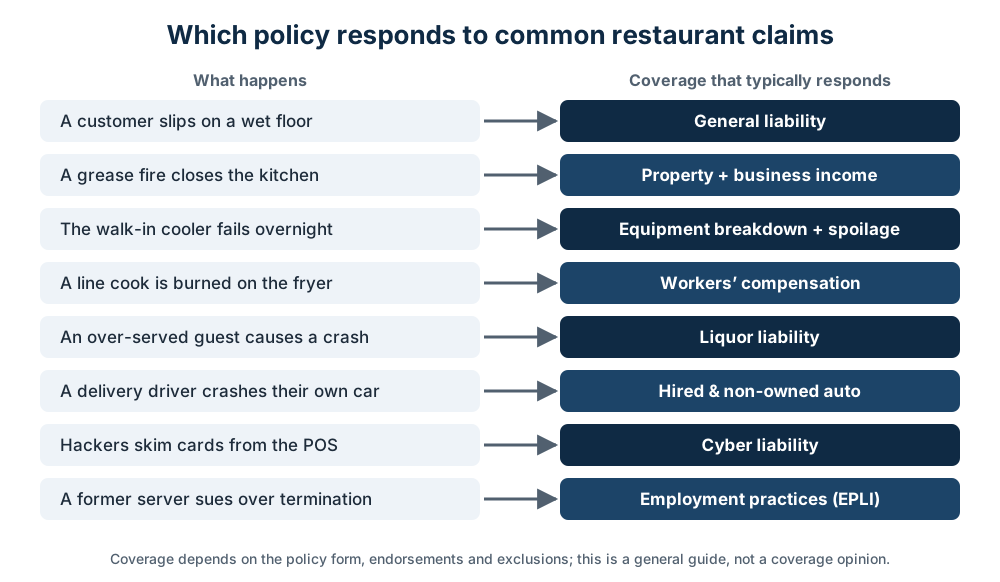
- General liability — handles customer injuries in the shop and damage you cause at a client’s location.
- Product liability — defends allergen, foreign-object and illness claims from retail and wholesale sales.
- Vendor endorsement — lets grocers and cafes that resell your goods be covered for claims arising from your products.
- Commercial property — protects ovens, mixers, fermentation cabinets, display cases and tenant improvements.
- Equipment breakdown — pays for electrical and mechanical failures on ovens and refrigeration.
- Spoilage — replaces fillings, dairy and finished goods lost to a cooler failure or outage.
- Business income — replaces lost earnings while you rebuild after a covered fire or storm.
- Workers’ compensation — mandatory at four or more employees, including part-time staff.
- Commercial auto or hired and non-owned auto — covers owned vans and staff using personal cars for deliveries.
Pricing drivers for a bakery policy
Underwriters weigh retail versus wholesale revenue, the number and type of accounts you ship to, whether you sell nut-containing or gluten-free lines, oven type and fuel, square footage, building age and construction, sprinklers, and distance from the coast. Payroll by class sets the workers’ comp cost, and delivery radius plus driver records set auto.
Bakeries that get better options usually keep allergen matrices and label approvals on file, clean exhaust and ovens on a schedule, guard mixers and train staff on lockout, use carts or lifting aids for flour, and screen anyone who drives for the business. A clean multi-year loss history is the single biggest lever you control.
Working with an independent agency on a bakery quote
Provident Financial Group takes one application to multiple carriers quoted through our agency, then lays the options side by side so you can compare product liability terms, equipment coverage and wind deductibles. We issue certificates for landlords and wholesale accounts, including vendor endorsements when a grocer asks. Call (866) 964-6660 to walk through it.
Frequently asked questions
Does bakery insurance cover a cake damaged on the way to a wedding?
Your own finished product in transit is usually a property or inland marine question, not liability, and many policies limit it. Ask us about transit coverage if custom cakes are a large share of revenue.
Do grocery stores require anything special from wholesale bakeries?
Many ask for product liability limits, additional insured status and a vendor’s endorsement. We can match the certificate to their vendor agreement.
Is flour dust something carriers ask about?
Often, for production bakeries. Housekeeping, ventilation and exhaust cleaning records help underwriting.
Can a home-based cake business use this coverage?
Home-based operations are underwritten differently. Tell us how and where you bake and we will see what you qualify for.
Ready to compare options for your bakery? Get Multiple Quotes within minutes.