
Fast food restaurants in Maryland typically need four core coverages: workers’ compensation (required once you have a single employee), general liability for drive-thru and dining-room injuries, commercial property with equipment breakdown for fryers, hoods and freezers, and hired and non-owned auto if anyone delivers. Franchised locations usually also need limits and endorsements written to match the franchise agreement.
This page is for Maryland owners and operators of quick-service restaurants: burger and chicken concepts, sub and taco chains, independent counter-service spots with a pickup window, and multi-unit franchisees from Hagerstown to Salisbury. If you run a slower, build-your-own concept, the Maryland fast casual page fits better.
What Maryland law and your franchisor expect from a quick-service unit
Workers’ comp starts with employee number one. The Maryland Workers’ Compensation Commission requires every employer with one or more employees to carry coverage, with few exceptions. That includes part-time crew members, weekend-only shift leads and the cousin who covers the register on Sundays. A 2024 law (Chapter 78, SB 216) raised the maximum fine for an uninsured employer to $25,000, and a responsible corporate officer can be held personally liable. Our Maryland restaurant workers’ comp guide covers the state fund option and how premium is figured.
Delivery drivers and Maryland auto minimums. Maryland’s minimum auto liability limits are 30/60/15 (in thousands of dollars). That is what a crew member’s personal policy may carry, and many personal policies exclude or restrict business delivery. When an employee crashes on a delivery run, the injured party will look to the restaurant. Hired and non-owned auto coverage protects the business in that gap.
Health department licensing. County and Baltimore City health departments license and inspect food service facilities under Maryland Department of Health rules. Several counties, Baltimore County among them, require a Certified Food Service Manager on site during all operating hours at medium- and high-priority facilities, so plan manager scheduling around late-night and early breakfast shifts. Confirm the exact rule with your local health department.
Franchise agreements. Most franchisors specify minimum limits, additional insured wording, waiver of subrogation and sometimes the carrier’s financial rating. Missing one endorsement can put you in technical default. Our FDD insurance requirements checklist walks through the usual list.
Drive-thru lanes, fryer vats and the 1 a.m. rush: where the claims start
Quick-service losses follow the pace of the business. A few patterns underwriters see again and again:
- A driver in the drive-thru lane rolls forward while looking at a phone and pins a crew member collecting trash near the menu board. That is a workers’ comp claim, and it may also become a liability claim against the site owner.
- A new hire filters fryer oil before it has cooled and suffers second-degree burns to both forearms, followed by weeks of lost time.
- A customer slips on ice tracked in by the breakfast crowd near the soda fountain and fractures a wrist. The lawsuit names the franchisee, the franchisor and the landlord.
- A grease buildup in the hood duct ignites during a Friday dinner push. The suppression system works, but smoke damage closes the unit for nine days.
- A late-night argument at the pickup window escalates, and a shift manager is assaulted in the parking lot.
- A summer thunderstorm knocks out power overnight and the walk-in freezer loses a full delivery of product.
High employee turnover makes every one of these more likely, because newer crew members account for a large share of kitchen injuries. Training and written procedures are the biggest levers you control.
Coverage lineup for a Maryland quick-service restaurant
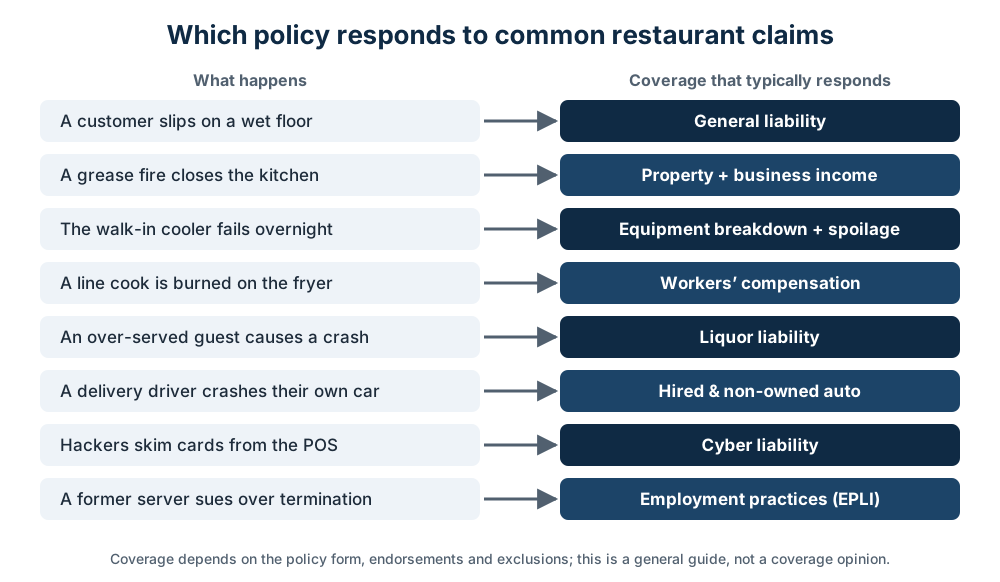
- Workers’ compensation and employer’s liability: required by Maryland law and the main protection for burns, cuts and strains on a busy line.
- General liability: slips, drive-thru incidents and customer injuries on premises, including defense costs when the franchisor is named alongside you.
- Products and completed operations: a customer who gets sick after eating takeout at home is a products claim, not a premises claim.
- Commercial property: building improvements, fryers, shake machines, POS terminals and signage.
- Equipment breakdown and spoilage: freezer compressors, walk-in coolers and ice machines fail at the worst possible time.
- Business income and extra expense: keeps payroll and rent covered while a fire-damaged kitchen is repaired.
- Hired and non-owned auto: fills the gap when employees deliver or run errands in their own cars.
- Crime and cyber: register theft, employee dishonesty, and card-data breaches at kiosks and in mobile ordering.
- Employment practices liability: wrongful termination and harassment claims are common where staff turn over quickly.
Why two Maryland burger stands can get very different quotes
Carriers price fast food on sales, payroll, hours and loss history. A unit open 24 hours pays more for liability and crime exposure than one that closes at 10 p.m. Deep fryer count, the age of the hood suppression system and whether it is serviced on schedule drive property pricing. Delivery volume changes the auto picture. Payroll by classification is the base for workers’ comp, adjusted by your experience modification once you qualify.
Ways to improve pricing: document hood cleaning and suppression inspections, install anti-slip mats at fryer and fountain stations, use drive-thru lane bollards, keep cash handling to drop safes, and put a written return-to-work program in place so injured crew members come back on light duty sooner. See how to lower restaurant insurance premiums for more.
How Provident Financial Group quotes quick-service restaurants
As an independent agency, we take one application and compare several carriers side by side, including markets that are comfortable with multi-unit franchisees and late-night hours. Once you bind, we issue certificates of insurance you can send to your franchisor, landlord and delivery partners the same day. Call (866) 964-6660 or start online.
Frequently asked questions
Do Maryland fast food restaurants need workers’ comp for part-time crew?
Yes. Maryland requires coverage for employers with one or more employees, with few exceptions, and part-time workers count. Coverage is subject to policy terms and underwriting.
Does my general liability policy cover an accident in the drive-thru lane?
A customer injured on your premises, including the drive-thru lane, is typically a general liability claim. Injuries to your own employees go to workers’ comp, and collisions between vehicles usually fall to auto policies.
What does my franchisor usually require on the certificate?
Most agreements ask for specific liability limits, additional insured status for the franchisor, waiver of subrogation and notice of cancellation. We match the endorsements to your agreement before you bind.
Are delivery app drivers covered by my restaurant policy?
Third-party app drivers are generally insured through their own arrangements, but your own employees who deliver need hired and non-owned auto on your policy to protect the business.
Want a side-by-side comparison for your Maryland location or group of units? Get Multiple Quotes within minutes.