
Caterers in South Carolina usually need general liability with products-completed operations, commercial auto for the vans and box trucks that haul food (the state minimum is 25/50/25 plus matching uninsured motorist), inland marine for equipment that travels, workers’ compensation once they employ four or more people, and liquor liability whenever they sell or serve alcohol at events.
This page is for full-service and drop-off caterers, wedding and event specialists, oyster-roast and barbecue crews, and restaurants that run a catering arm. Catering carries more moving parts than a fixed dining room: you work in someone else’s building, you drive, you set up tents and chafing dishes, and venues hand you contracts with insurance requirements attached.
What South Carolina law and venues expect from caterers
The South Carolina Department of Agriculture’s Retail Food Safety program permits caterers under Regulation 61-25, along with restaurants and mobile units. At least one person with authority over food preparation must be a certified food protection manager. For off-site work, your food safety plan for holding temperatures and transport is the thing an underwriter will ask about.
Vehicles you own must carry at least 25/50/25 (in thousands of dollars) in liability, with uninsured motorist coverage at the same limits. Those minimums are thin for a loaded catering van on I-26, and many venues and corporate clients want far higher auto limits on the certificate.
Alcohol is where South Carolina gets specific. A business licensed for on-premises consumption that sells after 5 p.m. must carry liquor liability, or general liability with a liquor endorsement, with an annual aggregate of at least $1,000,000, a per-occurrence limit of at least half the total, and SCDOR named as certificate holder. Since January 1, 2026 a risk mitigation program can reduce that requirement, down to a $300,000 floor, for things like closing by midnight, fully trained servers and alcohol under 40 percent of sales. Staff who serve alcohol at least 10 hours a week, and their managers, must now complete SCDOR-approved server training, with new hires given 30 days. If you only serve client-supplied alcohol, licensing questions belong with SCDOR Alcohol Beverage Licensing, but you still want host liquor coverage and should confirm exactly what the venue requires. Details are on our South Carolina liquor liability page.
The same 2025 reform, effective in 2026, lets fault be apportioned among the parties in alcohol cases, but where a drunk-driving defendant is also found liable the licensee can be jointly and severally liable for 50 percent of actual damages. For a caterer pouring at a wedding, that is a real exposure worth insuring properly.
Event-day scenarios that turn into catering claims
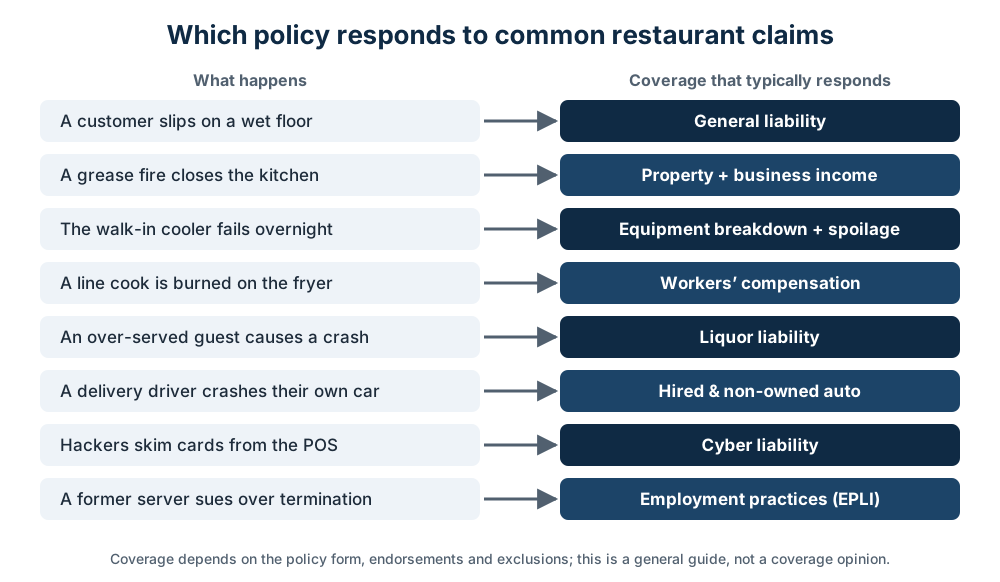
An August wedding under a tent outside Charleston: a buffet line sits too long in the heat, and a dozen guests report stomach illness the next day. That is a products-completed operations claim, and the venue’s attorney will want to see your additional insured endorsement. At the same event, a Sterno can tips and scorches a rented linen and part of a historic venue’s floor, which is property damage to property you do not own.
Driving is the other big one. A staffer rear-ends a car while hauling hotel pans and a warming cabinet to a corporate lunch in Columbia; your commercial auto responds, and if the staffer was using a personal pickup, hired and non-owned auto is what protects the business. Then there is gear: a trailer full of chafers, a smoker and folding tables is stolen from a lot overnight, which inland marine or an equipment floater handles better than a building policy.
Staff injuries happen on uneven ground: a server carrying a full sheet pan slips on wet grass at an oyster roast, or a cook gets a hot-oil burn at a fryer set up outdoors. And a guest who was over-served at the bar you staffed later causes a crash, putting your liquor coverage and those new fault rules to the test.
Coverage list for South Carolina caterers
- General liability — covers guest injuries and damage to venue property during setup, service and breakdown.
- Products-completed operations — responds to foodborne illness and allergen claims after food leaves your hands.
- Liquor liability — required for licensed on-premises sales after 5 p.m. and demanded by most venues whenever you pour.
- Commercial auto — protects owned vans and trucks above the 25/50/25 state minimum.
- Hired and non-owned auto — covers the business when staff drive personal vehicles or you rent a truck.
- Inland marine or equipment floater — insures chafers, smokers, tents and portable bars off premises.
- Workers’ compensation — required at four or more employees, counting part-time event staff.
- Umbrella liability — lifts limits for venues and corporate clients that require more than a primary policy provides.
Rating factors for a catering business
Carriers look at annual receipts, the split between drop-off and full-service events, how much of revenue is alcohol, the size of events, the number of vehicles and drivers, driving records, and whether you cook on-site with open flame or fryers. Payroll by class drives workers’ comp. Prior claims weigh heavily, especially auto and liquor losses.
To improve terms, keep a written holding-temperature and transport log, run motor vehicle records on anyone who drives for you, get every bartender through SCDOR-approved training before their first event, and use a standard contract that sets out who supplies alcohol and when service ends. Closing bars earlier and tracking alcohol as a share of sales can also help with the state’s risk mitigation program.
Quoting and certificates for caterers
Provident Financial Group is an independent agency, so one application goes to multiple carriers quoted through our agency and you see the options side by side. Caterers need certificates constantly; once you are bound we issue certificates with additional insured and waiver of subrogation wording for venues quickly. Call (866) 964-6660 with a venue contract in hand and we will check it against the policy.
Frequently asked questions
Does a South Carolina caterer need liquor liability if the client buys the alcohol?
The statutory requirement is tied to licensed on-premises sales after 5 p.m., but venues often require liquor or host liquor coverage anyway. Confirm licensing with SCDOR and match coverage to what the venue contract demands.
Are my event servers covered if they drive their own cars to a job?
Their personal auto is primary for the car, but hired and non-owned auto protects your business if it is named in a lawsuit.
Can I get a certificate for a wedding venue the same day?
Usually yes, once coverage is in force. Send us the venue’s requirements and we will issue the certificate with the endorsements it asks for.
Do seasonal event staff count for workers’ comp?
Part-time workers count toward South Carolina’s four-employee threshold, so seasonal servers and bartenders generally do.
Booked a big season? Get Multiple Quotes within minutes.