
Pizzerias in Indiana typically need hired and non-owned auto (or commercial auto) for delivery drivers, general liability, commercial property with equipment breakdown for deck or conveyor ovens, and workers’ compensation. Indiana requires comp for covered employers with no headcount minimum in the statute, and any pizzeria that pours beer or wine also needs liquor liability and ATC-approved server training for its staff.
This page is for independent pizzerias and pizza franchisees across Indiana, from carryout-and-delivery storefronts near campuses to family dine-in spots with a few taps. For most of them, the biggest exposure isn’t in the kitchen at all. It’s on the road, with drivers in their own cars racing to deliver during Friday night rushes and Saturday football games.
Delivery drivers and Indiana’s auto rules
Every vehicle on Indiana roads must carry at least 25/50/25 (in thousands of dollars) in liability under the BMV’s financial responsibility rules. When a driver in a personal car causes a crash on a delivery, the driver’s personal policy is typically the first to respond, but many personal policies restrict coverage for business delivery use, and the injured party’s attorney will name your pizzeria as well. Hired and non-owned auto coverage protects the business in that situation. If you own delivery cars, they belong on a commercial auto policy. Our hired and non-owned vs. commercial auto comparison goes deeper.
Workers’ comp is mandatory for covered employers under IC 22-3-5-1, and a driver hurt in a crash while delivering is usually a comp claim for your business. If your kitchen cooks raw animal foods, such as raw sausage or chicken toppings, Indiana requires a certified food protection manager responsible for all hours of operation (IC 16-42-5.2). If you serve beer or wine, your servers must complete ATC-approved training within 120 days of hire, and Indiana’s dram shop statute (IC 7.1-5-10-15.5) applies when staff have actual knowledge a guest is visibly intoxicated. See our Indiana liquor liability guide.
Pizza-shop claims: ovens, dough mixers and late-night runs
A driver makes a left turn across traffic with four pies on the passenger seat and T-bones a sedan. The injured couple’s lawsuit names the driver and the pizzeria, and the question becomes whose insurance pays first. Delivery pressure, whether from promised times or a crowded order screen, is a factor plaintiffs’ attorneys like to explore.
In the kitchen, a cook reaches into a deck oven with a peel and burns a forearm on the oven door; a dough mixer catches a sleeve; a slicer cuts a finger while prepping pepperoni. Grease buildup in the hood and duct over a fryer used for wings is a common fire starting point, and a conveyor oven failure on a Friday night shuts down the whole operation.
Late-night carryout and delivery also bring robbery exposure, both at the counter and to drivers carrying cash. And customers slip on flour-dusted floors near the pickup counter more often than you’d think.
What a pizzeria policy stack should include
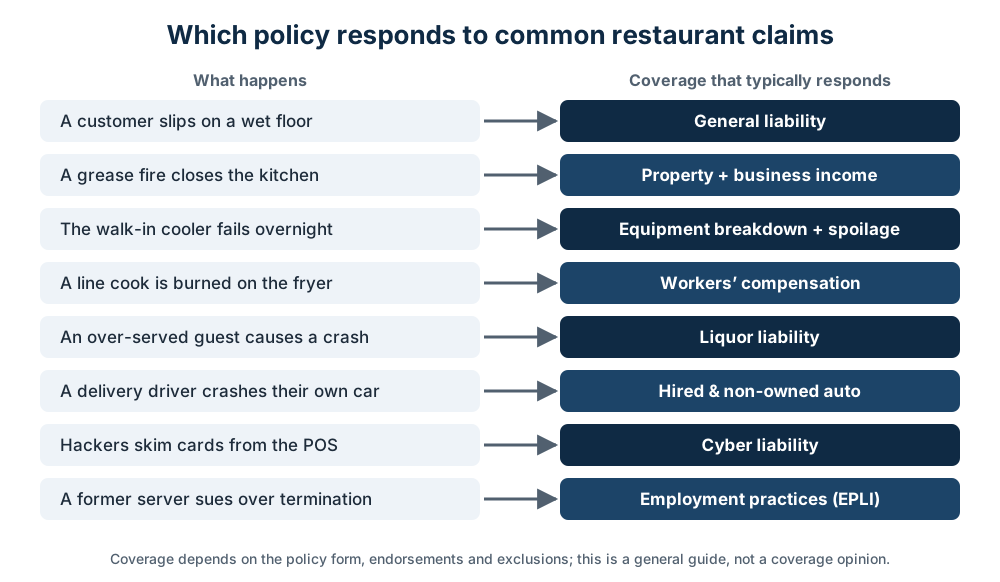
- Hired and non-owned auto — protects the business when employees deliver in their own cars.
- Commercial auto — any company-owned delivery vehicles.
- General liability — customer injuries in the store and at the door during delivery.
- Commercial property — ovens, mixers, walk-in, build-out and signage.
- Equipment breakdown — conveyor and deck oven control failures and walk-in compressors.
- Business income — lost sales after a hood fire or oven failure closes the kitchen.
- Workers’ compensation — burns, cuts, and drivers injured in crashes while delivering.
- Liquor liability — any pizzeria pouring beer or wine.
- Crime coverage — cash theft at the counter or by employees.
Factors behind pizzeria pricing
Carriers look at delivery sales as a share of revenue, the number of drivers and their motor vehicle records, delivery radius, hours, cooking equipment, fryers, hood suppression, alcohol sales and claims history. A shop where most orders go out the door in drivers’ cars rates very differently from a dine-in pizzeria that doesn’t deliver.
To improve pricing, pull motor vehicle records at hire and yearly, require drivers to keep their own auto coverage and collect declarations pages, avoid delivery-time promises that encourage speeding, keep hood cleaning and suppression inspections current, and limit cash drivers carry. Third-party delivery apps shift some driving exposure, but read their terms before assuming they cover you; our restaurant delivery insurance page explains the gaps.
Quoting a pizzeria with Provident Financial Group
As an independent agency, we take one application and compare quotes from multiple carriers side by side, including how each handles delivery exposure. Once bound, you get live certificates of insurance for landlords and franchisors. Call (866) 964-6660 to talk it through.
Frequently asked questions
Does my driver’s personal insurance cover a delivery crash?
Sometimes, but many personal policies limit coverage for business delivery, and the lawsuit may name your pizzeria too. Hired and non-owned auto protects the business when that happens.
If a driver gets hurt on a delivery, is that workers’ comp?
Usually yes. An employee injured in a crash while delivering for you is generally treated as a work injury under Indiana’s workers’ compensation system.
Do I need liquor liability for a few beers on tap?
Yes. Any alcohol service creates dram shop exposure, and your servers must meet Indiana’s server training requirement.
Does third-party delivery remove my auto risk?
It reduces it for orders the platform’s drivers carry, but not for your own drivers. Review each platform’s agreement and insurance terms.
Running a pizzeria in Indiana? Get Multiple Quotes within minutes. Or call (866) 964-6660.