
Delis and sandwich shops in Maryland usually need general and product liability, commercial property with spoilage coverage for meats and cheeses, hired and non-owned auto if staff deliver in their own cars, and workers’ compensation, which Maryland requires for any business with even one employee. Slicer injuries and allergen complaints drive a large share of deli claims.
Whether you run a corner carryout in Baltimore or a sub shop near a Hagerstown office park, the exposures look alike: sharp equipment, cold storage, a compressed lunch rush and more orders leaving on trays or in delivery bags.
Maryland requirements a sandwich shop runs into
Workers’ compensation is the one coverage Maryland mandates outright: any employer with one or more employees must carry it, and in 2024 the legislature raised the maximum fine for going without. You can buy it from a private carrier or from Chesapeake Employers’ Insurance Company, which covers any employer that applies. Details are on our Maryland restaurant workers’ comp page.
Your local health department, county or Baltimore City, licenses and inspects the shop under COMAR 10.15.03. Some jurisdictions, Baltimore County among them, require a certified food service manager on site during all hours at medium- and high-priority facilities, so confirm your priority level.
If sandwiches go out for delivery, Maryland’s auto minimums are 30/60/15 (in thousands of dollars). Those limits sit on the driver’s personal policy, which may exclude business use, and they are thin for a serious crash. A hired and non-owned auto endorsement protects the shop itself when an employee’s car causes an accident.
Selling bottled beer or wine with lunch? The license comes from your local liquor board, and unless your license class is excluded, the holder or a designated employee must complete an approved alcohol awareness program under Alcoholic Beverages § 4-505 and retrain every four years. See Maryland liquor liability insurance.
Where deli claims come from: blades, allergens and trays
The meat slicer is the signature deli injury. A new hire cleans the blade without the guard in place and needs stitches and weeks of hand therapy. That is a workers’ comp claim, and a pattern of them raises your experience mod. Knife work, box cutters and hot panini presses round out the list.
On the customer side, allergen cross-contact is the claim to worry about. A sesame-seeded roll shares a cutting board with a gluten-free order, or pine-nut pesto lands on a sandwich the ticket marked nut-free. Catering trays add risk: a law firm’s lunch sits on a conference table for three hours, and when several attendees feel sick the next day, the claim lands on the deli. A walk-in failure over a holiday weekend can wipe out cured meats, cheeses and salads at once, and a freshly mopped floor at 7 a.m. is a classic slip claim.
Coverage worksheet for a Maryland deli
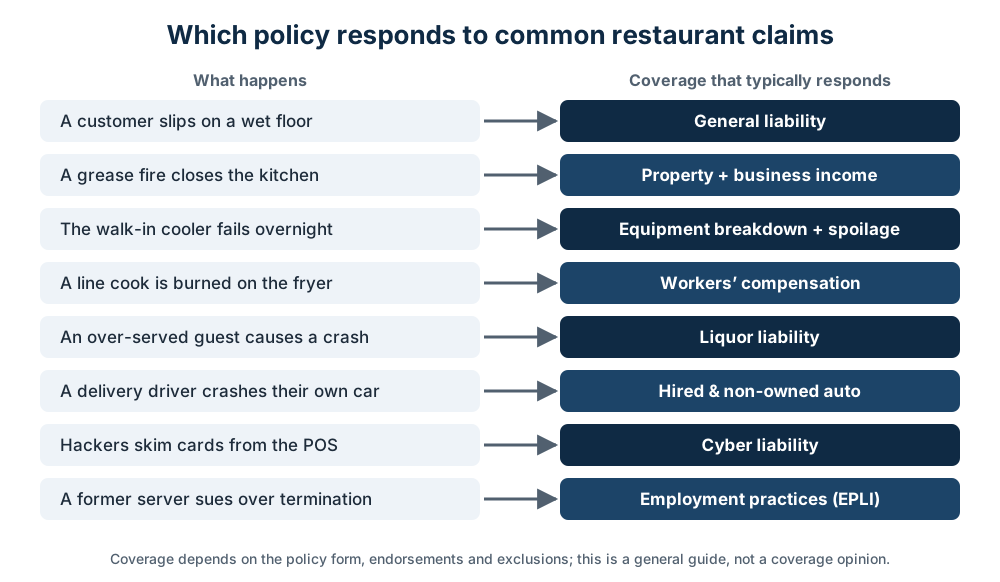
- General liability — customer slips, a hot soup spill, a collapsing chair.
- Products-completed operations — illness or allergic reactions traced to food that left your counter, including catering trays.
- Commercial property — slicers, ovens, display cases, POS terminals and tenant improvements.
- Equipment breakdown and spoilage — compressor failure on the walk-in and deli case, plus the inventory lost.
- Business income — lost profit and ongoing payroll after a fire or burst pipe closes the shop.
- Hired and non-owned auto — staff delivering catering orders in their own cars.
- Workers’ compensation — required with one employee; pays for slicer lacerations and burns.
- Liquor liability — needed if you hold a beer and wine license.
- Cyber liability — online ordering accounts and stored card data.
Rating factors for sandwich shops and how to move them
Underwriters start with annual sales and payroll, then look at cooking method (a cold-sandwich shop with one panini press rates differently from one running a fryer and flat-top), catering and delivery share, alcohol sales, hours, building age and loss history. Maryland’s hurricanes, flash flooding and winter storms also shape how carriers view a building.
What helps: cut-resistant gloves and a written slicer cleaning procedure, allergen labels and a consume-by time on every catering tray, temperature logs with an alarm on the walk-in, and asking delivery drivers for evidence of personal auto insurance above the state minimum. Clean loss runs are one of the strongest levers at renewal.
One application, several carriers
Provident Financial Group is an independent agency, so you fill out one application and we compare multiple carriers side by side for your deli. After you choose, we issue live certificates of insurance your landlord or corporate catering clients can download. Call (866) 964-6660 with questions.
Frequently asked questions
Is a slicer injury covered by general liability?
No. Injuries to your own employees fall under workers’ compensation, which Maryland requires once you have a single employee. General liability covers customers and other third parties.
Do I need extra coverage for office catering orders?
Your general liability policy should include products-completed operations, which responds when food you prepared causes illness after it leaves the shop. Add hired and non-owned auto if staff deliver trays in their own cars.
What happens if our walk-in cooler dies overnight?
Without spoilage coverage, food lost to a breakdown or power outage is often not covered. Equipment breakdown repairs the unit; spoilage pays for the product you throw out.
Can I buy workers’ comp from Chesapeake Employers?
Yes. Chesapeake Employers’ Insurance Company writes coverage for any Maryland employer that applies, and private carriers compete for the same business, so compare both.
Ready to review your deli’s coverage? Get Multiple Quotes within minutes.