
Caterers in Delaware typically need general liability that follows them to off-site events, liquor liability if they pour or bartend, commercial auto with Delaware’s mandatory PIP for their vans, and workers’ compensation from the first employee. Venues and wedding planners often require certificates naming them as additional insured, so caterers need a carrier that can issue those quickly.
Catering in Delaware ranges from corporate lunches in Wilmington office parks to beach weddings in Rehoboth and Bethany and fire-hall fundraisers in Kent County. Every job puts your staff, food and equipment in someone else’s space, which is exactly where gaps in a standard restaurant policy show up. The national catering insurance guide explains the basics; this page applies Delaware law.
Delaware licensing, liquor and auto rules for caterers
The Division of Public Health’s Office of Food Protection permits caterers statewide under the State of Delaware Food Code, and permitted establishments generally must have a Certified Food Protection Manager on staff. High-risk operations are not eligible for a variance from that rule.
If you serve alcohol at events, Delaware’s mandatory Responsible Alcoholic Beverage Server Training applies to anyone who sells, serves or dispenses it, and to their managers, with certification renewed every two years. The Office of the Delaware Alcoholic Beverage Control Commissioner handles licensing, and if clients want to bring their own alcohol to your own event space, a for-profit establishment needs a Bottle Club license before allowing it.
On liability, the Delaware Supreme Court held in McCall v. Villa Pizza, Inc. (1994) that there is no statutory or common-law cause of action against a licensed seller by someone injured off the premises by an intoxicated patron. That narrows third-party liquor suits, but it does not stop a guest from suing over an incident at the reception, it does not pay defense costs, and venues still demand liquor liability on the certificate. See our Delaware liquor liability page.
Your vans must carry at least 25/50/10 liability (in thousands of dollars) plus Personal Injury Protection of 15/30 (in thousands), which pays medical bills and lost wages regardless of fault.
Event-day risks a Delaware caterer carries
A server carrying a hotel pan of braised short rib trips on a tent stake at an outdoor wedding and burns a guest’s arm. A chafing-dish fuel can tips over and scorches a rented linen and a historic venue’s hardwood floor. Chicken salad held too long in a warm van causes a round of stomach illness among forty conference attendees. A late-night bartender over-pours at a retirement party, and a guest falls on the venue’s steps.
Your own people get hurt too: back strains loading tables and cambros, knife cuts during prep, burns at a carving station. And your equipment travels. Warmers, grills and a portable bar in the back of a van can be stolen from a parking lot or damaged in a collision on Route 1, and standard property coverage limited to your kitchen address may not follow it.
Building a caterer’s policy stack
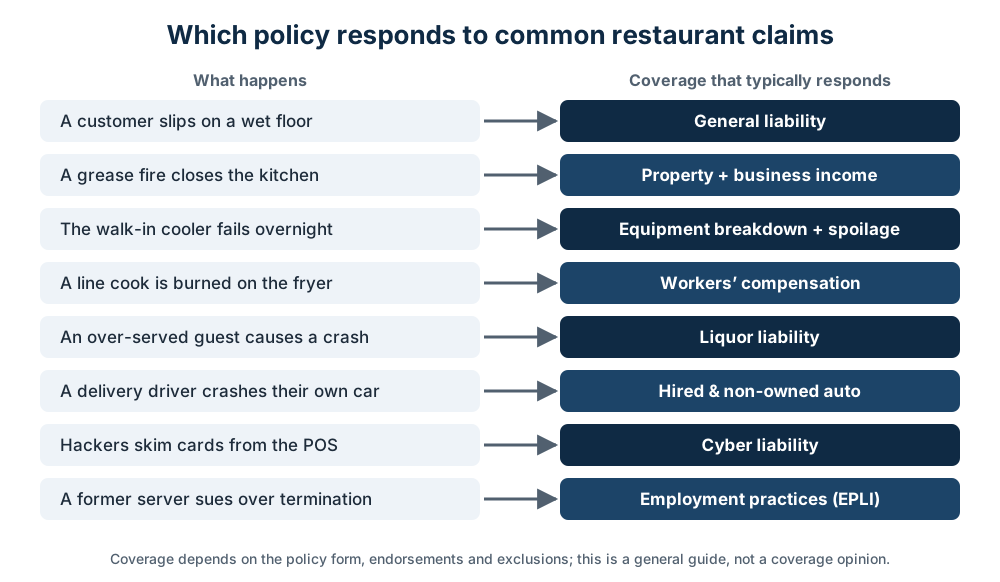
- General liability with off-premises coverage — guest injuries and venue damage at events anywhere you work.
- Products and completed operations — foodborne illness claims that surface after the event.
- Liquor liability — bartending and wine service; check whether host liquor or full liquor coverage fits your operation.
- Commercial auto — owned vans and box trucks, meeting Delaware minimums plus PIP.
- Hired and non-owned auto — staff using personal cars to deliver trays.
- Inland marine (equipment floater) — chafing dishes, grills and portable bars in transit or at venues.
- Workers’ compensation — required from the first employee, including event-day staff on payroll.
- Additional insured endorsements — the venue, planner or client named on your policy as contracts demand.
- Umbrella — higher limits for large weddings and corporate contracts.
How underwriters price a catering operation
The main rating factors are annual catering revenue, the share of events with alcohol, event size, off-site versus in-house events, vehicles and drivers, equipment values and claims history. A caterer that bartends every wedding will look different to an underwriter than one that drops off boxed lunches.
Keep temperature logs for transported food, carry certificates for every bartender, use closed fuel systems, sign clear contracts that assign responsibility with venues, and run motor vehicle records on anyone who drives. Those habits show up well in underwriting.
Getting catering quotes and certificates quickly
Provident Financial Group is an independent agency. Your one application goes to multiple carriers quoted through our agency, we compare liquor, off-site and auto wording side by side, and once you are bound you can issue live certificates of insurance to venues on short notice. Call (866) 964-6660.
Frequently asked questions
Do Delaware caterers need liquor liability if clients buy the alcohol?
If your staff serve it, you have exposure. Many venues require liquor coverage on your certificate regardless of who bought the bottles; our caterer liquor liability guide explains the options.
Does my restaurant policy cover catering jobs off site?
Not always. Some policies limit coverage to the listed premises, so confirm off-premises operations are included.
Can I add a wedding venue as additional insured?
Yes, most carriers allow additional insured endorsements, often blanket ones that cover any party you agree to in a written contract.
Are event-day helpers covered by workers’ comp?
Employees on your payroll must be covered once you have one employee. Workers supplied by a staffing agency are usually covered by that agency, so confirm in writing.
Booked a big season? Get Multiple Quotes within minutes.