
Bars and taverns in Connecticut typically need liquor liability insurance, general liability, commercial property and workers’ compensation, with assault and battery coverage confirmed in writing. Connecticut’s Dram Shop Act can hold a bar liable when a patron it served while intoxicated injures someone, and state law requires workers’ comp for every employer, even a bar with a single part-time bartender.
This page is for owners of neighborhood taverns, sports bars, music venues and cocktail lounges from Stamford to the Quiet Corner. It explains how Connecticut law shapes a bar’s insurance program, where claims really come from after midnight, and how to line up quotes from several carriers without filling out the same application five times.
Connecticut’s Dram Shop Act and what it means for a bar
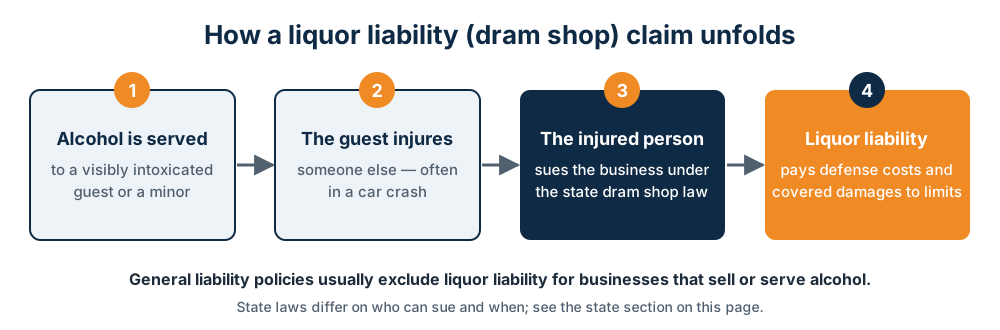
The Dram Shop Act, Conn. Gen. Stat. § 30-102, makes anyone who sells alcohol to an intoxicated person liable when that person goes on to injure another person or damage property. Damages under the statute are capped at $250,000 per injured person and $250,000 in the aggregate. The injured party must give the seller written notice within 120 days (180 days in cases of death or incapacity) and file suit within one year. There is no negligence claim under the act for a sale to someone 21 or older, but separate common-law claims for wanton or reckless service fall outside that cap, which is exactly why a bar should not treat the statutory figure as its ceiling.
Connecticut does not require liquor liability insurance by statute, but landlords, lenders and event partners almost always do. Server training is voluntary; the Department of Consumer Protection (DCP), Liquor Control Division recognizes approved seller and server programs under § 30-47(b) that run at least five classroom hours. Since January 1, 2026, applicants, permittees and backer owners on new permit applications, transfers and substitute-permittee filings must also complete DCP’s free Liquor Law Education Program. Carriers notice when a bar can show both.
Workers’ compensation is not optional. Under § 31-284(b), every Connecticut employer must insure its full liability with an authorized insurer or qualify as a self-insurer, and the statute sets no minimum headcount. See our Connecticut restaurant workers’ comp guide for penalties and pricing.
Where Connecticut bar claims actually come from
Most serious bar losses start with a judgment call at the rail. A regular watches the late game, orders two more rounds after the bartender has cut back, then rear-ends a car on I-95 on the way home. The injured driver’s attorney sends the 120-day notice, and your liquor liability policy is the one that has to answer.
Fights are the second big driver. A shove near the pool table turns into a broken orbital bone, and the injured guest sues the bar for inadequate security and for serving the aggressor. Many low-cost liquor forms exclude or sub-limit assault and battery, so a door staff incident can land with no defense at all if nobody checked. Winter adds its own pattern: a nor’easter leaves packed ice on the entry ramp, a guest leaving at close goes down hard, and the premises claim falls on general liability. Burst sprinkler lines during a freeze-up, a walk-in cooler failure the week before a holiday, and a kitchen grease fire round out the property side.
Coverage checklist for a Connecticut tavern
- Liquor liability — responds to dram shop and over-service claims; check that the limit sits comfortably above the statutory cap given uncapped reckless-service claims.
- Assault and battery coverage — confirm it is included or endorsed back, because bar fights drive a large share of injury suits.
- General liability — slip and fall on icy steps, a guest tripping over a speaker cable during a live set.
- Commercial property — building or tenant improvements, bar fixtures, draft systems, POS terminals and inventory.
- Equipment breakdown and spoilage — walk-ins, keg coolers and ice machines that fail during peak weekends.
- Business income — lost revenue if a fire or storm closes the bar for weeks.
- Workers’ compensation — required for every Connecticut employer, covering bartenders, barbacks and door staff.
- Employment practices liability — wrongful termination and harassment claims from a late-night staff culture.
- Umbrella — added limits over liquor, general liability and auto for a single catastrophic crash.
Pricing factors underwriters weigh for bars
Carriers price a bar mostly on its alcohol-to-food sales ratio, closing time, square footage, capacity, entertainment (live bands, DJs, dancing), security staffing and prior claims. A 2 a.m. dance bar prices very differently from a tavern that stops pouring at 11 and does half its sales in food. Location matters too: a shoreline building faces more wind and flood scrutiny than one inland.
You can improve how underwriters see you: document server training for every bartender, use ID scanners, keep an incident log, adopt a written cut-off policy, install cameras covering the door and parking lot, and keep a snow and ice removal log for the entrance. A clean three-year loss run is the single strongest lever.
Getting a bar quoted through an independent agency
Provident Financial Group is an independent agency, so you complete one application and we compare multiple carriers side by side, including markets comfortable with late hours and entertainment. Once you bind, we issue live certificates of insurance you can send to your landlord, a festival organizer or a promoter the same day. Call (866) 964-6660 or start online.
Frequently asked questions
Is liquor liability insurance mandatory for a Connecticut bar?
No Connecticut statute requires it, but leases, lenders and many event contracts do, and the Dram Shop Act makes the exposure real whether or not anyone asks for a certificate.
Does the dram shop cap limit everything a bar can owe?
No. The statutory cap applies to claims under § 30-102, but common-law claims for wanton or reckless service fall outside it, so higher liquor limits and an umbrella are worth pricing.
Do I need workers’ comp if my only employee works weekends?
Yes. Connecticut’s requirement has no minimum employee threshold, and uninsured employers face civil penalties and, for willful failure, felony exposure.
Will a fight in the parking lot be covered?
Only if your policy includes assault and battery coverage and the parking area is part of your insured premises. Ask us to confirm both before you bind.
Ready to compare bar coverage in Connecticut? Get Multiple Quotes within minutes.