
Breweries and taprooms in Kentucky typically need product liability, liquor liability for the taproom, property and equipment breakdown for the brewhouse, and workers’ compensation from the first employee. Kentucky’s dram shop statute, KRS 413.241, can expose the taproom when staff serve a guest who is visibly intoxicated, while the beer you package and distribute carries its own product exposure.
This guide is written for production breweries, brewpubs, and taproom-first operations across Kentucky, whether you sell pints in a converted warehouse in Louisville’s Butchertown, run a small-batch system in Lexington, or can beer for distribution around the state. A brewery sits between manufacturer and hospitality business, and the insurance program has to reflect both halves.
Kentucky rules a taproom operator should know
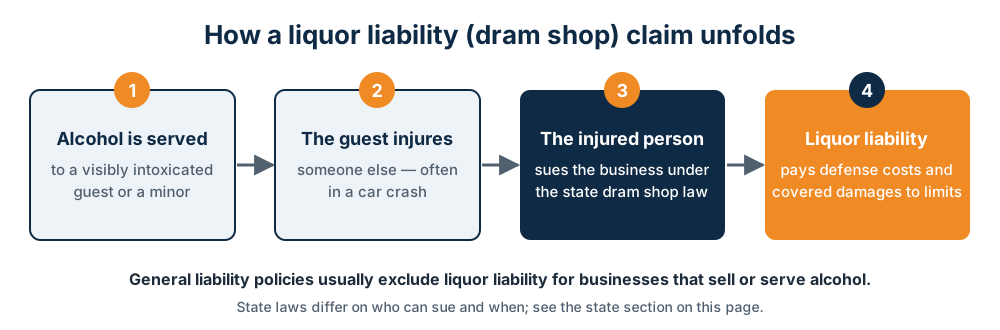
The taproom is a licensed retail setting, and Kentucky’s Department of Alcoholic Beverage Control oversees licensing. Under KRS 413.241, drinking rather than serving is treated as the proximate cause of alcohol-related injuries, and the intoxicated person is primarily liable. A licensee who serves someone of legal age is not liable for off-premises injuries unless a reasonable person should have known the guest was already intoxicated when served. There is no statutory damage cap, and the protection does not apply to anyone who forces drinks on a guest or misrepresents a drink as nonalcoholic.
Taprooms create a specific version of that risk: higher-alcohol stouts and barrel-aged releases served in the same glassware as a session lager. Pour sizes, flight policies, and release-day crowds are what an attorney will examine. Kentucky ABC’s STAR server training, a three-hour course with a certificate good for three years, is a practical way to document that your beertenders know how to spot and cut off intoxicated guests. See our Kentucky liquor liability page for more on limits.
Workers’ comp applies from your first employee in Kentucky, counting part-time and temporary staff, so the weekend canning crew and seasonal taproom help are included.
Brewhouse and taproom risks that lead to claims
On the production floor, the claims are physical: a brewer scalded while cleaning a kettle, a chemical splash from caustic used in clean-in-place cycles, a back injury moving grain sacks, or a worker overcome by carbon dioxide in a poorly ventilated fermentation room. Forklifts moving pallets of cans add another layer.
Product claims come from what leaves the building. A batch of cans continues fermenting after packaging and a can bursts in a retailer’s cooler, injuring a stocker. A fruited sour is contaminated and a distributor pulls it from shelves, and the retailer wants the cost of the recall reimbursed. A label omits an allergen from an adjunct ingredient.
In the taproom, think crowded release days with lines out the door, food trucks parked on your lot, trivia nights, and patio games. A guest trips over a hose left out after a transfer, or a cornhole board tips onto a child. Each of these lands on a different part of the policy.
Coverage a Kentucky brewery should line up
- Product liability — injuries or damage caused by beer you brew and package, including cans and kegs sold through distributors or at other venues.
- Liquor liability — taproom pours and on-site events; confirm whether offsite festival pours are covered or need a separate policy.
- General liability — guest injuries on your premises, including patio and lawn-game areas.
- Workers’ compensation — required in Kentucky from employee one; essential for scalds, chemical burns, and lifting injuries.
- Equipment breakdown — kettles, fermenters, glycol chillers, boilers, and the canning line.
- Spoilage and contamination — beer lost in tanks when refrigeration fails or a batch becomes contaminated.
- Product recall expense — the cost of pulling beer from shelves; general liability usually does not pay it.
- Commercial auto or hired and non-owned auto — delivery vans and employees running kegs in their own vehicles.
- Inland marine — kegs, mobile bars, and festival equipment that travel off premises.
Rating factors for breweries and ways to improve them
Carriers look at annual barrel production, the split between taproom sales and distribution, packaging type, the distance your beer travels, and whether you run a kitchen. Taproom hours, events, and outside food vendors matter for liquor liability. Brewhouse age, boiler inspections, and sprinkler protection shape property pricing.
Owners who document quality control, keep batch records that support a targeted recall, require certificates of insurance from food trucks, and train taproom staff tend to see better terms. Stating clearly on the application that you do not pour offsite, or that you use a separate event policy when you do, also avoids surprises.
One application, several brewery quotes
Brewery risks do not fit every carrier’s appetite, which is why working with an independent agency helps. Provident Financial Group sends one application to multiple carriers that write breweries, compares product, liquor, and equipment terms side by side, and issues certificates of insurance for distributors, landlords, and festival organizers. Reach us at (866) 964-6660.
Frequently asked questions
Does a Kentucky brewery need both product liability and liquor liability?
Usually, yes. Product liability addresses beer you sell into the market, while liquor liability addresses serving guests in your taproom, and each responds to different kinds of claims.
Is a burst can claim covered?
Injuries or property damage from a defective can are typically a product liability claim, but the cost of pulling remaining cans from shelves requires separate recall coverage.
Are festival pours covered by my taproom policy?
Not always. Some liquor liability policies are limited to your licensed premises, so ask the carrier or buy an event policy before pouring offsite.
Do I need comp if the only employees are family?
Kentucky counts family members as employees for workers’ comp purposes, so family help generally triggers the requirement.
Ready to compare brewery programs? Get Multiple Quotes within minutes.