If you have ever shopped for restaurant insurance, you have almost certainly run into the term “business owner’s policy,” usually shortened to BOP. It is one of the most common starting points for insuring a small or mid-sized restaurant, and for good reason. A BOP bundles several essential coverages into one package that is usually simpler to manage than buying each piece separately.
But a BOP is a starting point, not necessarily the finish line. Restaurants face risks that many standard BOPs do not fully address, and assuming your package policy handles everything can leave real gaps. Here is a plain-English look at what a BOP typically includes, what it often leaves out, and how to decide whether yours is enough for the way you actually operate.
What a BOP Actually Bundles Together
At its core, a business owner’s policy combines two main coverages. The first is commercial property insurance, which typically covers your building if you own it, along with contents like kitchen equipment, furniture, fixtures, and inventory, against perils such as fire, theft, and certain kinds of water damage.
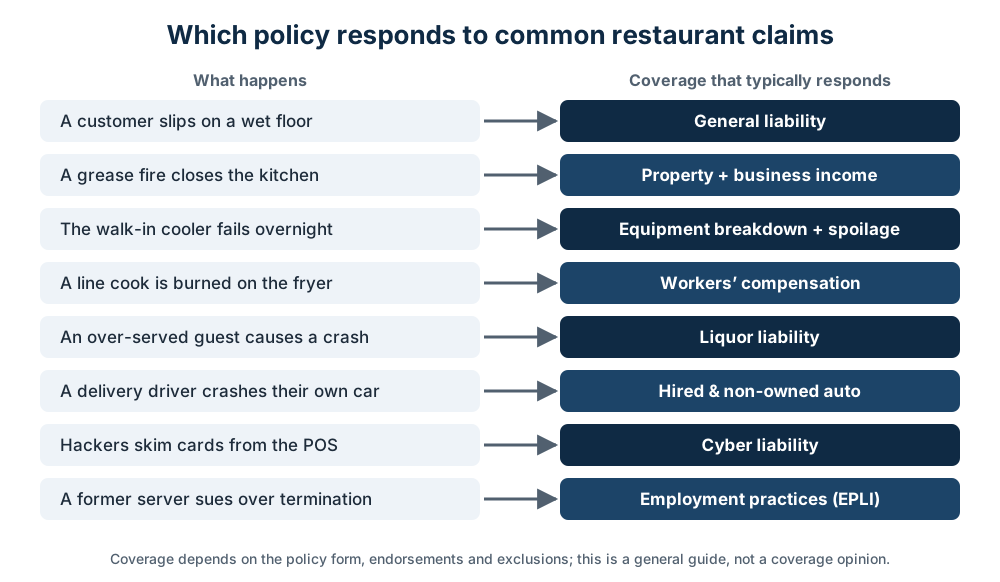
The second is general liability insurance, which is designed to respond when someone outside your business claims you caused them harm. For a restaurant, the classic examples are a guest who slips on a wet floor or a customer who alleges a meal made them ill. Liability coverage may help pay for legal defense costs as well as settlements or judgments in those situations.
Most BOPs also include some amount of business income coverage, often called business interruption insurance. If a covered event such as a kitchen fire forces you to close temporarily, this portion of the policy may help replace lost income and keep certain ongoing bills paid while you get back on your feet.
Why BOPs Are So Popular With Restaurant Owners
The appeal is largely about simplicity. Instead of juggling separate property and liability policies with different renewal dates and different insurers, you have one policy, one premium, and one point of contact. Bundling coverages this way is also often more economical than purchasing each one on its own.
Many carriers go a step further and offer restaurant-specific BOP programs. These may build in options that matter to food service businesses, such as equipment breakdown coverage or protection related to food contamination incidents. What is available varies quite a bit from one insurer to the next, which is one reason it pays to compare programs rather than assume all BOPs are alike.
Eligibility is also part of the picture. BOPs are generally designed for smaller, lower-risk businesses, so insurers often set limits on square footage, revenue, or the type of operation. A large full-service restaurant, or one with significant bar sales, may not qualify and may need a commercial package policy instead.
What a Standard BOP Typically Leaves Out
This is where many owners get surprised. A BOP is not an “everything” policy, and several important coverages usually live outside of it.
Workers’ compensation is the big one. A BOP does not include it, yet coverage for employee injuries is generally required by law once you have staff, with the specific rules varying by state. Commercial auto insurance is also separate, so vehicles used for business purposes need their own policy.
Liquor liability deserves special attention. If your restaurant sells or serves alcohol, the standard liability portion of a BOP typically excludes claims arising from that service, which means a separate liquor liability policy or endorsement is usually needed. Other common gaps include employment practices liability, which addresses claims like wrongful termination or harassment, and cyber coverage for incidents involving your point-of-sale system or customer data. Flood and earthquake damage are also typically excluded from the property portion.
Where the Fine Print Matters for Restaurants
Even within the coverages a BOP does include, the details can make a real difference. Many policies contain sublimits, which are smaller caps on specific types of losses. Spoiled food, outdoor signage, and money on premises are common examples where the built-in limit may be far lower than what a busy restaurant could actually lose.
Equipment breakdown is another area worth checking. Standard property coverage generally responds to outside perils like fire, but a walk-in cooler compressor that simply fails, or an electrical surge that damages your line equipment, may only be covered if breakdown coverage was added. For a restaurant, where a single piece of equipment can shut down the whole menu, that distinction matters.
Older buildings raise their own question. If a covered loss triggers modern building code requirements, the extra cost of bringing the space up to code may not be fully covered without ordinance or law coverage. Restaurants in historic districts or aging strip centers often benefit from reviewing this closely.
How to Tell Whether a BOP Is Enough for You
There is no universal answer, because the right structure depends on how your restaurant actually runs. A small cafe with no alcohol service, no delivery, and modest equipment may find that a well-built BOP with a few endorsements covers most of its exposure. A restaurant with a busy bar, catering jobs, valuable equipment, and a large staff almost certainly needs more than the base package.
A useful habit is to walk through a typical week and ask what could go wrong at each step. Think about the people you employ, the vehicles that touch your business, the alcohol you serve, the data you collect, and the events you work outside your four walls. Then compare that list to what your policy actually names.
It is also worth revisiting the question regularly. Renovations, new equipment, a second location, or a new service line can all change your risk picture faster than a once-a-year renewal glance will catch.
A BOP is a strong foundation for most independent restaurants, but the difference between adequate and inadequate coverage usually comes down to the details of your specific operation. An independent agent who works with restaurants can review your current policy, point out where the common gaps tend to show up, and compare options from multiple carriers rather than just one. If you are not sure whether your BOP is keeping pace with your business, a short conversation is an easy way to find out where you stand.