
Ghost kitchens in South Carolina generally need general and product liability sized to satisfy delivery-app agreements, hired and non-owned auto for any staff who drive, property and equipment coverage for the gear they own inside a shared or leased kitchen, cyber liability for online ordering, and workers’ compensation once four or more people are on payroll. Business income matters more than most owners expect.
This page covers delivery-only brands, virtual concepts run out of an existing restaurant’s kitchen, and operators renting stations in commissary or shared-kitchen facilities in Charleston, Columbia, Greenville and beyond. With no dining room, the risk profile shifts from slip-and-fall toward product, contract, delivery and data exposures.
State requirements and delivery-app contracts
A ghost kitchen is still a retail food establishment in the eyes of the South Carolina Department of Agriculture’s Retail Food Safety program, which permits kitchens under Regulation 61-25. You need a certified food protection manager with authority over food preparation. Running several virtual brands from one line does not change that, but it does multiply the menu items and allergens an underwriter will ask about.
Delivery platforms and shared-kitchen operators set most of the insurance terms. Expect requirements for general liability limits, additional insured status for the facility owner, and waiver of subrogation. Our page on what delivery apps require from restaurants walks through typical asks.
Third-party couriers are not your employees, but if your own staff ever run orders, South Carolina’s auto minimum is 25/50/25 (in thousands of dollars) plus matching uninsured motorist, and their personal policies may exclude delivery. Hired and non-owned auto protects the business when that happens. Workers’ comp is required once you regularly employ four or more people, part-time included; see the South Carolina workers’ comp guide.
How ghost kitchens actually get hurt
Mislabeled orders are the classic delivery-only claim. Two brands share a line, a shrimp fried rice gets packed into a bag meant for a customer who ordered the vegetable version and flagged a shellfish allergy, and the reaction leads to an emergency room visit. Products-completed operations coverage and your ticket and labeling system are what defend that claim.
Shared facilities create property surprises. A grease fire starts at another tenant’s station overnight and smoke damages your fryers, freezers and packaging stock. The building owner’s policy protects the building, not your equipment, and your lease may waive your right to recover from them. Without your own property and business income coverage, you absorb the loss and lose weeks of sales while the facility is cleaned.
Online ordering puts card data and customer information in play. A compromised integration between your POS and an ordering platform exposes customer records, and notification and forensic costs land on you. Staff injuries follow a production-kitchen pattern: burns from high-volume fryers, cuts during fast prep, and slips on wet floors during a Friday night rush with tablets chirping nonstop.
Coverage stack for a South Carolina ghost kitchen
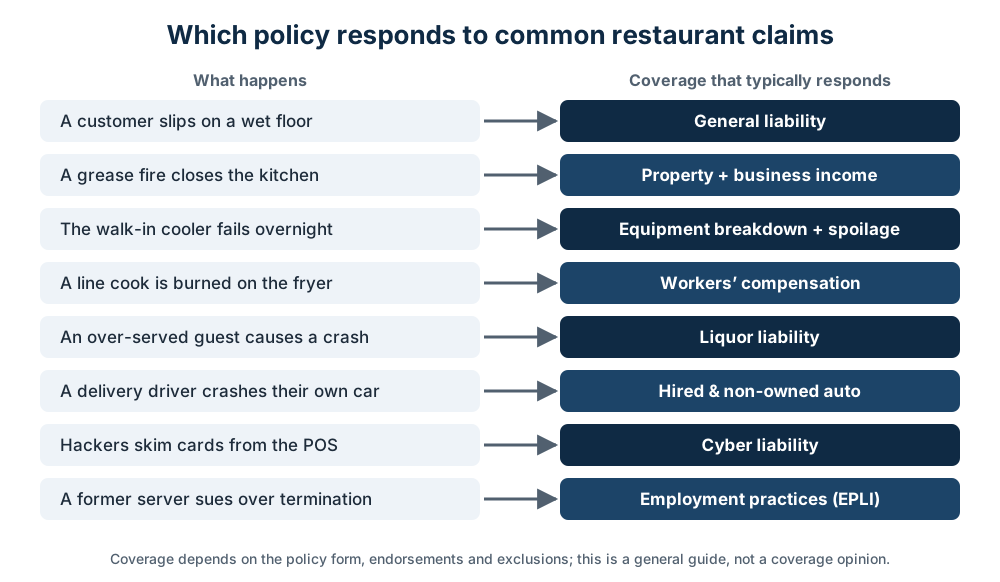
- General liability — meets delivery-app and facility requirements and covers injuries to visitors and couriers at pickup.
- Products-completed operations — the core protection for illness, allergen and foreign-object claims from delivered food.
- Hired and non-owned auto — covers the business if staff use personal cars to deliver or run supplies.
- Business personal property — insures your own equipment and inventory inside a leased or shared kitchen.
- Business income and extra expense — replaces lost sales when a fire or outage shuts the facility.
- Equipment breakdown and spoilage — pays for failed freezers and the product inside them.
- Cyber liability — responds to data breaches through POS and online ordering systems.
- Workers’ compensation — mandatory once four or more people regularly work for you.
What influences ghost kitchen pricing
Underwriters look at total sales across all brands, number of concepts and menu complexity, cooking methods, whether you operate in a shared facility or your own space, fire suppression, delivery volume, any owned or employee-driven vehicles, payroll by class, and prior claims. New concepts without history are rated more on the operator’s experience.
Helpful steps: color-coded bags and stickers by brand, allergen flags printed on every ticket, documented hood and suppression service, a clear written understanding of who insures what in your facility agreement, multifactor authentication on ordering platforms, and a policy that staff never deliver in personal cars without approval.
Comparing ghost kitchen quotes with Provident Financial Group
We take one application to multiple carriers quoted through our agency and show the results side by side, including how each handles shared-kitchen property and delivery exposures. Certificates for facility operators and platforms are issued once you bind. Call (866) 964-6660 with your facility agreement and we will review the insurance section with you.
Frequently asked questions
Does the shared-kitchen owner’s insurance cover my equipment?
Usually not. The facility’s policy protects its building and its own property; you need coverage for the equipment and inventory you own.
Who is liable when a courier gets into a crash with my order?
A third-party courier’s crash is generally their and the platform’s exposure, but lawsuits often name the restaurant too, so general liability and hired and non-owned auto still matter.
Can multiple virtual brands go on one policy?
Often yes, if they run from the same kitchen and entity. List every brand name so each is recognized on the policy.
Is cyber coverage really necessary for a delivery-only kitchen?
Nearly all of your revenue flows through digital ordering, which makes data and payment exposures central rather than optional.
Launching or expanding a virtual brand? Get Multiple Quotes within minutes.