
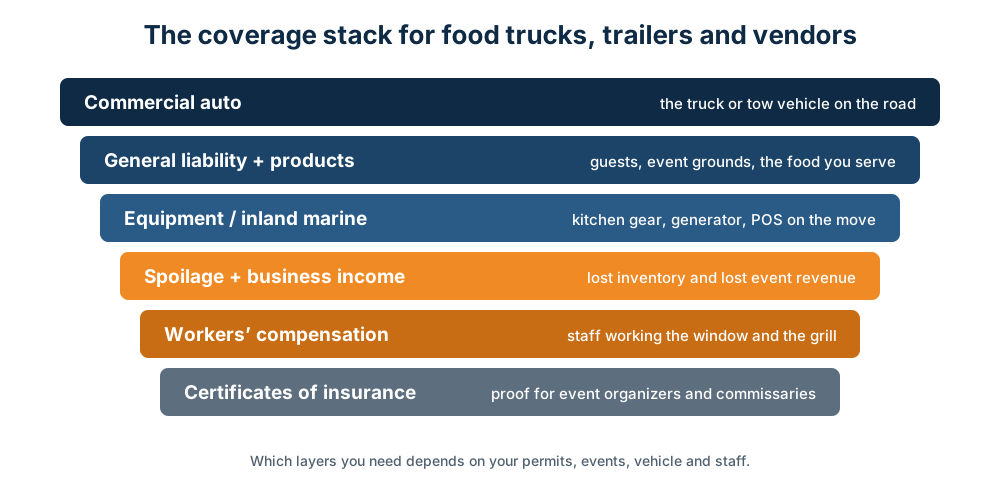
Food vendors and farmers market sellers in South Carolina typically need general liability with products coverage, which is the certificate most markets and festivals ask for, commercial auto that meets the state’s 25/50/25 minimum plus matching uninsured motorist coverage, inland marine for tents, coolers and cooking gear, and workers’ compensation once four or more people regularly work for the business.
This page is for vendors who sell from a booth, tent, cart or trailer: farmers market regulars with baked goods, jams and prepared foods, barbecue and fried-fish vendors working festivals from Rock Hill to Beaufort, and weekend sellers who follow the event calendar. If you operate a full truck, see our food truck insurance page as well; the national picture for booth sellers is on food vendor insurance.
Permits, commissaries and auto minimums in South Carolina
Mobile food units are permitted by the South Carolina Department of Agriculture’s Retail Food Safety program through a Mobile Food Establishment supplemental application, and every permitted unit needs a permitted commissary behind it. If you sell potentially hazardous or TCS foods, such as barbecue, wings or fried fish, the unit must be fully enclosed; a pull-behind cooker on its own does not count as a mobile unit. At least one person with authority over food prep must hold a certified food protection manager credential. Sellers of shelf-stable items should confirm with the department which permit, if any, fits their products.
On the road, South Carolina requires auto liability of at least 25/50/25 (in thousands of dollars) and uninsured motorist coverage at the same limits. Those are floors, not recommendations; a loaded van or a truck towing a smoker trailer can cause damage well beyond them, and many event contracts ask for higher auto limits.
Workers’ comp becomes mandatory when you regularly employ four or more people, and part-time help and family members count. See our South Carolina restaurant workers’ comp guide for exemptions and penalties.
Market-day mishaps that turn into claims
Pop-up tents and afternoon thunderstorms are a bad pairing. A gust lifts an unweighted canopy and drops it on a shopper two booths over; the injured person’s claim runs to your general liability policy, and the market will want to know you were insured before it happened.
Your product travels home with the customer, which is why products coverage matters. A chip of glass in a jar of pepper jelly, a sealed container of pimento cheese left in a hot car and then blamed on you, or an unlabeled pecan in a batch of cookies can each produce a bodily injury claim weeks after the market closes. Clear ingredient labels and lot records help defend those claims.
Cooking on site adds heat and fuel. A propane line on a fryer that loosens mid-service, an extension cord stretched across the walkway, or a hot smoker lid that burns a child reaching past the table are all realistic. Getting there carries its own risk: a van rear-ending a car on the drive to Charleston’s market at dawn, or gear stolen from a trailer parked at a hotel the night before a festival.
Vendor coverage checklist for South Carolina markets and festivals
- General liability — covers bodily injury and property damage around your booth, including canopy and cord trip incidents.
- Products-completed operations — responds when food you sold causes illness or injury after the sale.
- Additional insured endorsements — lets you name the market, festival promoter or property owner as organizers usually require.
- Commercial auto — for vehicles titled to the business or used mainly for vending, at or above 25/50/25 plus uninsured motorist.
- Hired and non-owned auto — covers liability when helpers drive their own cars to pick up supplies.
- Inland marine — tents, coolers, generators, fryers and smokers while in transit or at an event.
- Workers’ compensation — required once four or more people regularly work for you.
- Spoilage — for vendors carrying refrigerated inventory between a commissary and events.
Pricing factors for a vendor policy
Carriers look first at what you sell and how you cook it. Packaged baked goods and preserves rate very differently from open-flame barbecue or deep-fried fish. Annual gross receipts, number of events per year, whether you buy a year-round policy or single-event coverage, vehicles and driver records, where equipment is stored overnight, and prior claims all feed the quote.
Vendors can improve terms by keeping a fire extinguisher at every cooking station, weighting and staking every canopy, labeling allergens on every package, storing gear in a locked space, and keeping drivers with clean records behind the wheel.
How a quote comes together for a vendor
Provident Financial Group is an independent agency, so one application goes to multiple carriers and you compare their answers side by side. Once coverage is bound, we can issue live certificates of insurance naming each market or festival as additional insured, often the same day an organizer asks. Call (866) 964-6660 if your event calendar is already filling up.
Frequently asked questions
Does the farmers market’s own insurance cover my booth?
Generally no. The market’s policy protects the market; it usually does not respond to claims arising from your food or your setup, which is why most markets require vendors to carry their own liability and name the market as additional insured.
Can I tow a smoker to events on my personal auto policy?
Many personal auto policies limit or exclude business use, so a crash on the way to a paid event can be disputed. Tell your agent how the vehicle is used and consider a commercial auto policy that lists the trailer.
Do I need a separate certificate for every festival?
Each organizer typically wants a certificate with its own name as certificate holder and additional insured. With an annual policy in place, those certificates can be issued as needed without buying new coverage.
Is an annual policy better than buying coverage one event at a time?
For occasional sellers, single-event coverage can work. Vendors who work markets most weekends usually find an annual policy easier to manage and more consistent, subject to underwriting.
Ready to line up coverage before your next market? Get Multiple Quotes within minutes.