
Fast food restaurants in South Carolina usually need workers’ compensation (NCCI classifies them under code 9083, Restaurant: Fast Food), general liability that addresses drive-thru and parking lot exposures, property with business income and equipment breakdown for fryers and freezers, crime coverage for cash handling, employment practices liability, and auto coverage if they deliver. Franchise agreements often dictate the limits.
This page is for quick-service burger, chicken, taco and sandwich operators, both franchisees and independents, with drive-thrus along interstates and main corridors from Florence and Anderson to Myrtle Beach and Goose Creek. Long hours, heavy traffic and a large hourly workforce shape the program.
South Carolina rules and franchise requirements
Your permit comes from the South Carolina Department of Agriculture’s Retail Food Safety program under Regulation 61-25, and you need at least one certified food protection manager with authority over preparation and service. Franchise systems typically layer their own food safety audits on top.
Workers’ comp is required once you regularly employ four or more people, part-time staff included, which every fast food unit does. South Carolina uses NCCI as its rating bureau, and fast food units are classified under 9083 rather than the general restaurant code. Coverage is bought from private carriers, with an NCCI-administered assigned risk plan for employers who cannot find it in the voluntary market. Our South Carolina restaurant workers’ comp guide covers penalties and cost control.
If your own staff deliver in vehicles, South Carolina requires at least 25/50/25 (in thousands of dollars) in auto liability plus matching uninsured motorist coverage. Franchise disclosure documents usually specify higher minimums for liability, auto, umbrella and sometimes EPLI and cyber; our FDD insurance requirements checklist helps you line them up.
Drive-thru, fryer and late-night risks
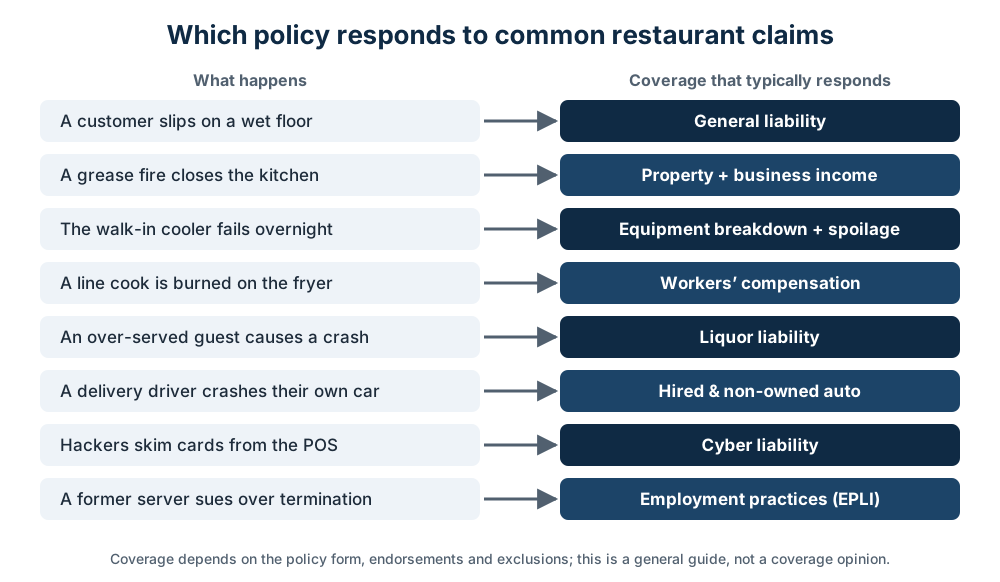
Drive-thru lanes produce a distinct set of claims. A driver misjudges the turn, jumps the curb and flattens the menu board and speaker post; a customer reaching for a bag at the window catches a hand on the window track; a pedestrian walking across the lane from the parking lot is struck. Some of that falls to the driver’s auto carrier, but your general liability and property policies absorb a share.
Fryers drive employee injuries. Filtering oil at close, a worker loses grip on the shuttle and suffers a serious burn to the legs. Add slips on greasy quarry tile, cuts from prep slicers and back strains unloading truck deliveries, and it is easy to see why workers’ comp is often the largest line item for a fast food unit.
Late hours bring crime. An armed robbery at 1 a.m. near an interstate exit leaves an employee injured and the safe emptied. Workers’ comp covers the employee, while crime coverage, not general property, typically covers stolen money. Internal theft by an employee manipulating voids is another common crime claim. On the coast, a hurricane that knocks out power for days turns into spoilage and business income questions.
Fast food coverage checklist
- Workers’ compensation — mandatory at four or more employees; the biggest exposure for fryer burns and slips.
- General liability — covers customer injuries in the dining room, parking lot and drive-thru lane.
- Commercial property — insures building or improvements, drive-thru equipment, signage and kitchen gear.
- Equipment breakdown and spoilage — pays for failed freezers, fryers and HVAC plus lost food.
- Business income — replaces lost sales after a fire, vehicle strike or storm closes the unit.
- Crime coverage — protects against robbery, safe burglary and employee theft of money.
- Employment practices liability — defends wage, discrimination and harassment claims from a large hourly team.
- Commercial or hired and non-owned auto — covers delivery vehicles and staff errands.
- Umbrella — meets franchise-required limits above primary policies.
Rating factors for quick-service restaurants
Carriers weigh sales, number of units, hours (24-hour stores rate differently), drive-thru volume, cooking equipment and suppression, building ownership and construction, payroll by class, turnover, cash-handling procedures, delivery exposure, and several years of loss runs. Franchise brand standards can help if they include strong safety programs.
Practical improvements: automated oil-handling systems or strict filtering procedures, non-slip mats and shoe programs, bollards and curbing at the drive-thru, drop safes with time delays, cameras and two-person closing, and a documented return-to-work program to shorten workers’ comp claims.
How we quote fast food operators
Provident Financial Group takes one application to multiple carriers quoted through our agency and presents the options side by side, including multi-unit programs. We issue certificates to landlords and franchisors once you bind and can align limits with your franchise agreement. Call (866) 964-6660 to start.
Frequently asked questions
Why is my fast food workers’ comp class different from a sit-down restaurant?
NCCI uses code 9083 for fast food and 9082 for other restaurants, and each class carries its own rate.
Does restaurant insurance cover cash stolen in a robbery?
Money is usually covered under crime coverage rather than standard property, so confirm you carry it.
Who pays when a car hits our drive-thru menu board?
The driver’s auto liability should respond first; your property policy can pay and pursue recovery if needed, subject to your deductible.
Can I meet my franchisor’s insurance requirements through an independent agency?
Yes. Send us the franchise agreement’s insurance section and we will quote to those specifications.
Running one unit or several? Get Multiple Quotes within minutes.