
Fast food restaurants in Kentucky typically need general and product liability, workers’ comp from the first employee, property and business interruption coverage for a freestanding drive-thru building, employment practices liability for a large hourly team, and hired and non-owned or commercial auto if the store delivers. Franchise agreements usually set minimum limits and additional insured wording the policy must meet.
This page is for quick-service and drive-thru operators in Kentucky, both franchisees and independent burger, chicken and taco stands. High volume, long hours and fryer-heavy kitchens make fast food a comp and liability story first. Our national fast food insurance page covers the concept in general.
Kentucky requirements for quick-service and drive-thru operators
Workers’ comp is mandatory in Kentucky once you have one employee, and part-time and temporary workers count toward that, which covers essentially every fast food store. Kentucky uses NCCI’s classification system, which includes a Restaurant: Fast Food classification (9083) separate from Restaurant NOC (9082). Uninsured employers face civil fines for each employee and each day without coverage under KRS 342.990, and they lose the protection that normally makes comp the exclusive remedy for workplace injuries. Our Kentucky restaurant workers’ comp page goes deeper.
Food service is regulated by the Cabinet for Health and Family Services under 902 KAR 45:005. If you run delivery with your own drivers or vehicles, Kentucky’s auto liability minimums are 25/50/25 (in thousands of dollars), and franchisors typically require far more. When employees deliver in their own cars, hired and non-owned auto protects the business on top of the driver’s personal policy.
Drive-thru, fryer and late-night claim scenarios
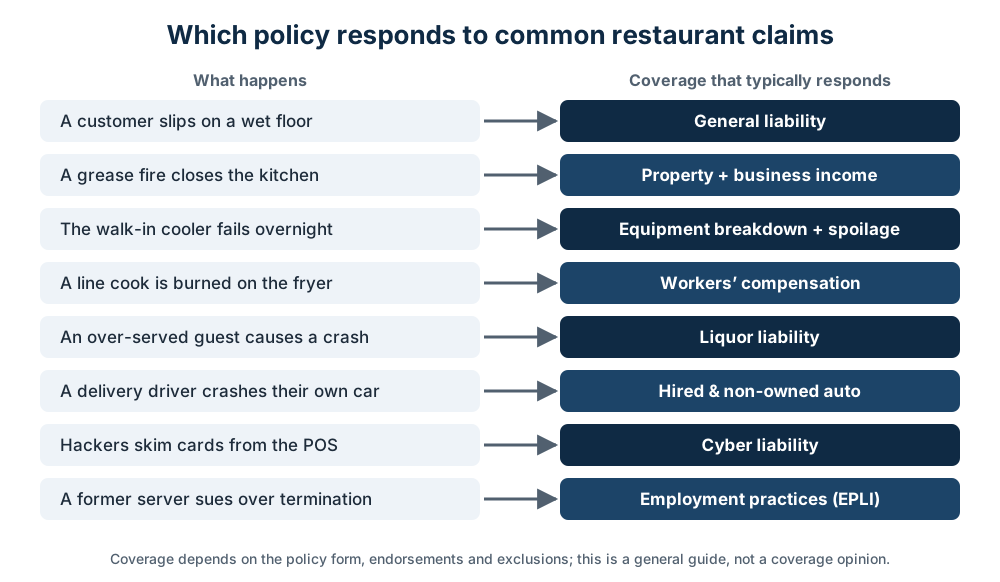
- A driver misjudges the drive-thru lane and hits the menu board canopy, knocking out the order system for the evening rush.
- An employee changing fryer oil without a shuttle unit splashes hot oil and suffers a burn to the lower leg.
- During a late-night shift, a robbery at the window leaves an employee injured, and cash in the drawer is taken.
- A customer slips on a freshly mopped restroom floor with no wet-floor sign in place.
- A crew member at the drive-thru window develops a shoulder strain from repetitive reaching.
- A former shift manager files a claim alleging she was fired after complaining about schedules and harassment.
Fast food losses are frequent, and comp claims in particular add up across a busy staff. Underwriters want to see that you manage them.
Quick-service coverage lineup for Kentucky
- Workers’ comp — required from the first employee and usually the largest line of coverage for a fast food store.
- General and product liability — covers customer injuries on premises and in the parking lot plus foodborne illness claims.
- Property coverage — insures the building if you own it, or improvements and equipment if you lease.
- Business interruption — replaces income while a fire or a vehicle strike keeps the drive-thru closed.
- Employment practices liability — addresses wrongful termination, discrimination and harassment claims from hourly staff.
- Crime coverage — responds to cash losses from robbery or employee theft.
- Hired and non-owned or commercial auto — for delivery and supply runs.
- Umbrella liability — helps meet franchise agreement minimums above primary limits.
Why premiums differ between two fast food stores
Two stores with identical menus can price very differently. Carriers weigh sales volume, hours (overnight service raises crime and violence exposure), drive-thru share, parking lot conditions and lighting, fryer count and hood suppression, payroll by class, turnover and prior claims, including your experience modification on comp.
Ways to improve pricing include fryer oil shuttles, anti-slip mats and floor-care schedules, cash-handling limits and drop safes, good lot lighting and cameras, and a written return-to-work program so injured employees come back on light duty.
Meeting franchisor requirements through an independent agency
Provident Financial Group takes one application and shops it with multiple carriers quoted through our agency, then compares them side by side against your franchise agreement’s requirements. We issue live certificates of insurance with the additional insured wording franchisors and landlords ask for. Call (866) 964-6660.
Frequently asked questions
Will my franchisor accept any carrier?
Franchisors often set minimum limits, required endorsements and sometimes carrier financial standards. Our FDD insurance requirements checklist helps you compare.
Is a car hitting my drive-thru covered?
Your property policy typically responds to the physical damage, subject to terms, and business interruption may cover lost income. Your carrier may then pursue the driver’s auto insurer.
Does workers’ comp cover an employee hurt during a robbery?
Injuries arising out of and in the course of employment, including workplace violence, are generally handled as comp claims, subject to Kentucky law and the policy.
Do I need EPLI if turnover is high?
High turnover tends to increase exposure to employment claims. See how EPLI differs from general liability.
Ready to compare quotes for your store? Get Multiple Quotes within minutes.