
Fast food restaurants in Kansas typically need workers’ compensation (required once gross annual payroll exceeds $20,000), a restaurant package policy with general liability and property, equipment breakdown for fryers and freezers, crime coverage for cash handling, and hired and non-owned or commercial auto for delivery. Franchise agreements usually dictate limits, and Kansas hail makes property deductibles a real budgeting decision.
This page is for quick-service restaurants in Kansas with drive-thru lanes, late hours and high transaction counts: franchise units along highway exits in Salina and Junction City, independent burger and chicken stands in Wichita, and multi-unit operators across Johnson County.
Kansas rules behind a quick-service insurance program
Workers’ compensation is the coverage Kansas law forces first. The Kansas Department of Labor requires it for employers with more than $20,000 in gross annual payroll, and KDOL warns that failing to secure coverage may lead to fines and could even result in business closure. With large hourly crews and frequent turnover, fast food units reach the threshold in the first weeks of operation. Our Kansas workers’ comp page for restaurants covers how coverage is bought and priced.
Food service licensing runs through the Kansas Department of Agriculture’s Food Safety & Lodging program. KDA recommends a certified food protection manager but does not require one statewide; franchisors typically do. If your crew delivers in their own or company vehicles, remember that Kansas auto policies must carry at least 25/50/25 liability (in thousands of dollars) plus PIP and uninsured/underinsured motorist coverage. And because the Kansas Insurance Department warns about damaging winds and hail statewide, freestanding units with large glass drive-thru windows and pole signs should review wind/hail deductibles and sign coverage carefully.
Fryers, drive-thru lanes and late nights
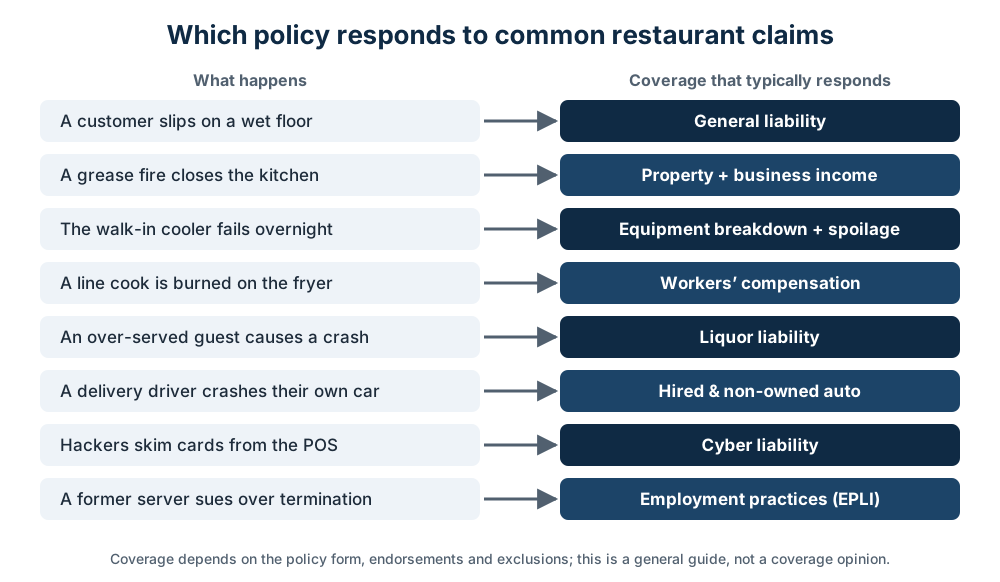
Grease is the defining fast food exposure. A fryer’s high-limit switch fails during a late-night rush, the oil ignites, and the hood suppression system discharges. Even a contained fire means cleanup, lost inventory and several days closed. Crew members are burned by splashing oil while filtering fryers or carrying hot baskets, and slips on greasy tile near the fry station are a steady source of comp claims.
The drive-thru adds its own scenarios. A customer’s car clips the menu board and the canopy post at the order point, or a frustrated driver gets out and injures a crew member at the window. Late hours bring robbery and workplace violence exposure, including an armed holdup at closing when the safe is being counted. Delivery drivers add auto liability every night the store is open.
On the customer side, undercooked chicken or a missed allergen on a customized order leads to products claims, and a winter slip on an icy walkway near the entrance is one of the most frequent premises losses in Kansas.
Must-have coverages for Kansas fast food operators
- Workers’ compensation — required above the payroll threshold; burns, slips and lifting injuries are constant.
- General liability — customer injuries inside, on walkways and in the drive-thru lane.
- Products liability — foodborne illness and allergen claims from high-volume production.
- Commercial property — building or improvements, equipment, drive-thru systems and exterior signs.
- Equipment breakdown — fryers, freezers, ice machines and HVAC that keep the kitchen running.
- Business income — lost earnings after a covered fire or storm closes the unit.
- Crime coverage — employee theft and cash losses from holdups.
- Hired and non-owned or commercial auto — delivery by employees in personal or company vehicles.
- Employment practices liability — hourly staffing brings wage, scheduling and termination disputes.
Why two fast food units rarely pay the same
Premium follows sales and payroll, hours (24-hour operations rate differently), the number of fryers and whether suppression covers every appliance, delivery volume and who drives, the building’s construction and fire protection, crime history in the area, and the unit’s own claims. Multi-unit operators may be able to combine locations for more consistent pricing.
You can improve how a unit prices by scheduling hood and duct cleaning and suppression inspections, training crews on fryer filtering and oil transport, putting anti-slip mats at the fry station, keeping a drop-safe cash routine with limited cash on hand after dark, and running motor vehicle records on delivery drivers.
Shopping fast food coverage across carriers
Provident Financial Group is an independent agency, so one application reaches multiple carriers and we compare them side by side, matched to your franchise agreement’s requirements. After binding you receive live certificates of insurance for landlords and your franchisor. Call (866) 964-6660 to discuss single or multi-unit programs.
Frequently asked questions
Does my franchisor decide what insurance my Kansas unit carries?
Your franchise agreement usually sets minimum coverages, limits and additional insured wording. You buy the policy, but it has to meet those terms.
Is a grease fire in the hood covered?
A sudden fire is generally a covered property loss, subject to policy terms and your maintenance of the suppression system. Carriers may ask for service records after a claim.
Are robberies at closing time covered?
Stolen cash typically falls under crime coverage, while injured employees are a workers’ comp claim. Confirm your crime limits match what is in the safe on a busy night.
Do my delivery drivers need to be on a commercial auto policy?
If the restaurant owns the vehicles, yes. If employees use their own cars, hired and non-owned auto protects the business on top of their personal coverage.
Adding a unit or renegotiating your lease? Get Multiple Quotes within minutes.