
Fast food restaurants in Delaware typically need general liability, property and business income coverage built around fryers and drive-thru lanes, workers’ compensation from the first employee, hired and non-owned or commercial auto for delivery, and crime coverage for cash handling. Long hours, high transaction counts and a large hourly workforce mean frequent smaller claims, which is exactly what carriers price for.
This page is for quick-service restaurants in Delaware, from franchised burger and chicken units along Route 13 and Route 1 to independent drive-ins and late-night takeout spots. It focuses on the requirements and exposures that separate fast food from other restaurant types.
Drive-thru, delivery and Delaware auto rules
If your restaurant owns a delivery vehicle, Delaware requires liability of at least 25/50/10 (in thousands of dollars) plus Personal Injury Protection, which pays medical bills and lost wages regardless of fault. More often, employees deliver in their own cars, and that is where hired and non-owned auto protects the business if a crash leads to a claim against the restaurant. Third-party app drivers generally carry their own coverage for the trip, but platform contracts may still require certificates from you.
The drive-thru lane is a liability exposure of its own. A car that jumps the curb, a pedestrian crossing the lane or a customer hit by a falling menu board are general liability questions, while damage to your building by a vehicle is a property question. Read how the two interact on our HNOA vs. commercial auto page.
Staffing, permits and the first-employee comp rule
Delaware requires workers’ compensation for any employment with one or more employees, and an uninsured employer faces a civil penalty of three times the premium not purchased plus daily fines after notice. The Division of Public Health’s Office of Food Protection permits fast food restaurants under the State of Delaware Food Code, and a Certified Food Protection Manager must be on staff. With high turnover, keeping a certified manager on every shift takes planning.
Late nights, hot oil and cash drawers
- A crew member slips on grease near the fry station while carrying a basket and burns an arm, a classic comp claim.
- A robbery at the drive-thru window at closing leaves an employee injured and the night’s deposit gone.
- A car in the drive-thru lane lurches forward and strikes the building’s order canopy.
- A customer finds a foreign object in a sandwich and chips a tooth.
- A power loss after a summer thunderstorm shuts down freezers stocked for the weekend.
Coverages for a Delaware quick-service restaurant
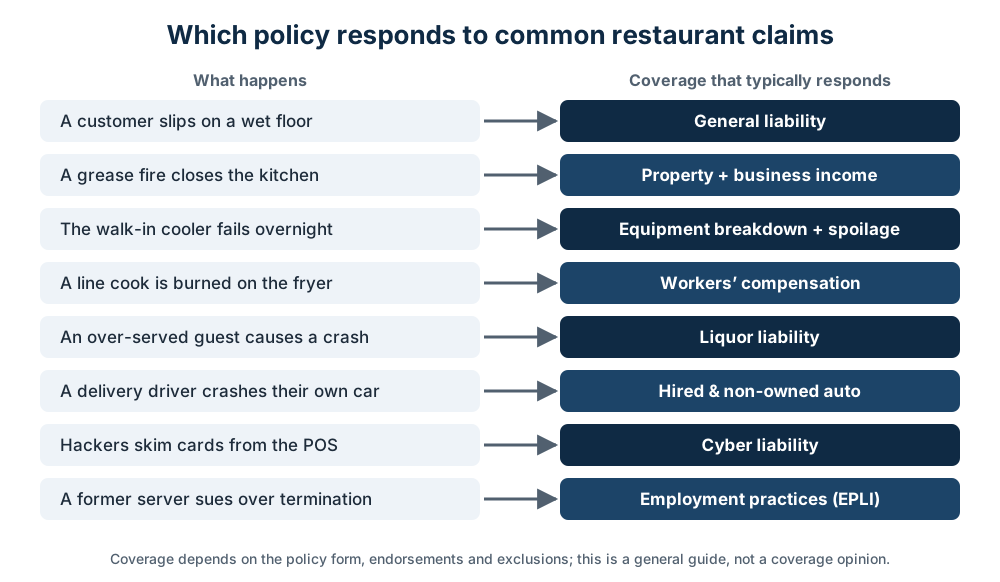
- General liability — the main answer to customer injuries, foreign-object claims and foodborne illness.
- Property and business income — protects the building or improvements, fryers and freezers, and replaces lost sales after a covered fire.
- Workers’ compensation — required from the first employee and critical given burn, slip and cut frequency.
- Hired and non-owned auto or commercial auto — for delivery by staff in personal cars or company vehicles.
- Crime and employee dishonesty — covers robbery, burglary and internal cash theft that property forms limit.
- Equipment breakdown and spoilage — for refrigeration and fryer failures and the inventory lost.
- Employment practices liability — addresses scheduling, harassment and termination claims from a large hourly staff.
- Umbrella — adds limits franchisors and landlords commonly require.
Factors that shape fast food premiums
Carriers rate on sales, payroll, hours (24-hour and late-night operations draw closer attention), fryer count and hood suppression, drive-thru presence, delivery volume, cash handling practices and loss history. Franchise brand standards can help. To improve your position, keep hood and suppression service current, use drop safes and limit cash on hand after dark, train new hires on fryer safety in their first week, add anti-slip mats and document all of it.
Quoting quick-service locations side by side
Provident Financial Group is an independent agency: one application goes to multiple carriers, and we compare options side by side, including crime and EPLI terms that vary widely. For multi-unit operators we can review every location together. Certificates for franchisors, landlords and delivery platforms can be issued fast. Call (866) 964-6660. Coverage is subject to underwriting and policy terms.
Frequently asked questions
Does property insurance cover cash stolen in a robbery?
Usually only in a limited way. Crime coverage is designed for money and securities and can be added to your package.
Is a car crashing into my drive-thru canopy covered?
Physical damage to your building is typically a property claim, and your insurer may seek recovery from the driver’s auto carrier.
How does Delaware treat a restaurant that lets its comp lapse?
The penalties include three times the premium not purchased plus per-employee daily fines, and injured workers can sue without the employer’s usual defenses.
Do franchise fast food units need their own policies?
Yes. Franchisees generally buy their own coverage and name the franchisor as additional insured to meet the franchise agreement.
Compare coverage for your quick-service location. Get Multiple Quotes within minutes.