
Fast food restaurants in Connecticut typically need workers’ compensation for every employee (the state sets no minimum headcount), general liability that meets any franchise agreement, property and business income coverage that addresses fryer and hood fires, and hired and non-owned or commercial auto for delivery. Employment practices liability and crime coverage are common add-ons for high-volume, late-night locations.
This guide is for independent burger and chicken shops, franchisees running a single unit off I-95 or I-84, and multi-unit operators with drive-thrus across the state. Quick-service exposures differ from a sit-down dining room: more transactions per hour, more part-time staff, longer hours and a parking lot full of moving cars. Our national fast food restaurant insurance page covers the basics; this page applies them to Connecticut.
Connecticut requirements for quick-service operators
Workers’ comp is the big one. Conn. Gen. Stat. § 31-284(b) requires every employer to insure its full liability with an authorized insurer or qualify as a self-insurer, with no employee threshold. Coverage is bought from private carriers; there is no state fund, and restaurants that cannot find a voluntary carrier go to the assigned risk plan administered by NCCI. Penalties for going without are steep, including a felony charge for a knowing and willful failure to insure. The details are on our Connecticut restaurant workers’ comp page.
Food safety permits come from your local health director under the Connecticut Food Code. Fast food kitchens handling raw proteins generally land in a class that requires a certified food protection manager and a designated alternate person in charge under Conn. Gen. Stat. § 19a-36i. If you run your own delivery vehicles, Connecticut’s auto minimums are 25/50/25 (in thousands of dollars) plus uninsured and underinsured motorist coverage of at least 25/50 (in thousands of dollars), though franchise agreements and landlords usually require far more.
If you operate as a franchisee, your franchise disclosure document and agreement will list required coverages, limits and additional insured wording. Those contract terms often matter more than the state minimums. Our franchise restaurant insurance page walks through the usual requirements.
Drive-thru, fryer and late-shift exposures
Quick-service claims tend to cluster around a few moments in the day:
- A customer in the drive-thru lane backs into the car behind her while reaching for a dropped bag. Both drivers claim the lane layout was confusing, and your business gets named alongside them.
- Grease builds up in the exhaust duct faster than the cleaning schedule anticipated. A flare-up spreads past the hood, the suppression system discharges, and the store is closed for weeks while the kitchen is rebuilt.
- A crew member on the overnight shift is confronted at the register and injured during a holdup. That creates a workers’ comp claim, a crime loss for the cash taken and possibly a premises liability suit if a customer was hurt too.
- A teenager on the fry station reaches over the basket and gets a serious splash burn to the forearm.
- A winter freeze-up bursts a pipe over the weekend, and the water ruins the dining room floor and shorts out the soda system.
Connecticut’s nor’easters, heavy snow and ice also mean more slip-and-fall claims in the parking lot and at the entry mat from December to March, so clearing and salting logs are worth keeping.
Coverages a fast food location should carry
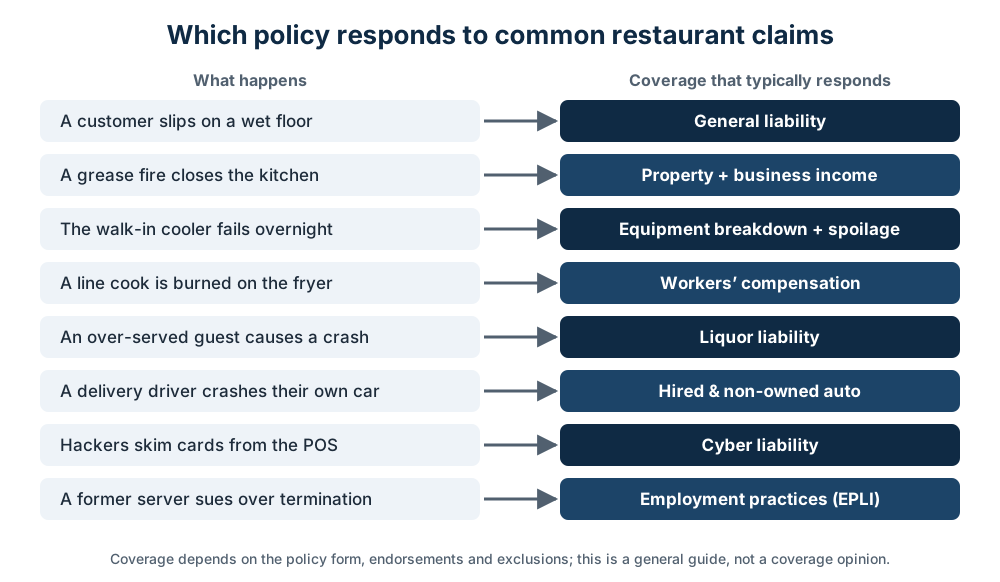
- General liability — covers customer slips, drive-thru incidents on your premises and foodborne illness claims; set limits to match your franchise or lease.
- Commercial property — protects the building or tenant improvements, fryers, broilers, walk-ins and signage from fire, wind and theft.
- Business income and extra expense — keeps payroll and rent paid while a fire or covered loss has the store closed.
- Equipment breakdown — responds to failed compressors, fryers and POS systems that a standard property form treats as mechanical failure.
- Workers’ compensation — required for every employee in Connecticut; the main protection against burn, cut and robbery-related injuries.
- Hired and non-owned auto or commercial auto — covers staff delivery runs and any vehicles the business owns.
- Employment practices liability — addresses harassment, wrongful termination and scheduling disputes common with large part-time crews.
- Crime and cyber — employee theft, robbery of cash on hand and card data breaches from compromised payment terminals.
How carriers price a quick-service risk
Underwriters look at gross sales, payroll by job type, hours of operation, whether you have a drive-thru, the type of cooking (open flame, deep fryers), building construction and protection, and your prior losses. A 24-hour location in a high-crime area rates differently from a lunch-only unit in a food court. Franchise brand standards can help, because established operating manuals usually mean consistent hood cleaning, training and security procedures.
Ways to improve your pricing: keep hood and duct cleaning invoices on a fixed schedule; install drop safes and limit cash in the drawer overnight; train fry staff on basket handling and require proper gloves and aprons; run a return-to-work program for injured staff; and clean up any open claims before renewal so a new carrier sees a settled history.
Working with an independent agent on a QSR quote
Provident Financial Group is an independent agency, so one application goes to multiple carriers quoted through our agency and you compare the results side by side. We read your franchise agreement or lease for required limits and additional insured wording before quoting, and we issue live certificates of insurance you can send to your franchisor or landlord. Call (866) 964-6660 to talk it through. Coverage is subject to underwriting and policy terms.
Frequently asked questions
Will a standard policy satisfy my franchisor’s insurance requirements?
Not always. Franchisors often require specific limits, umbrella coverage and additional insured endorsements with exact wording, so we match the policy to the agreement before binding.
Are drive-thru collisions covered by general liability?
Injuries or damage on your premises caused by your operations can fall under general liability, but a crash between two customers’ cars is usually handled by their own auto policies. Your policy defends you if you are named, subject to its terms.
Is cash stolen in a robbery covered?
Money and securities losses need crime coverage or a specific endorsement; most property forms limit or exclude cash. Injuries to employees in a holdup go to workers’ comp.
Do third-party delivery apps change what I need?
If app drivers deliver your food, their platform arrangements apply to the driving, but you still carry product liability for the food. If your own staff deliver, you need hired and non-owned auto at a minimum.
Ready to compare quick-service quotes? Get Multiple Quotes within minutes.