
Fast casual restaurants in Vermont typically need general liability with products coverage, tenant property and improvements coverage, business income, hired and non-owned auto for delivery, cyber coverage for online ordering and kiosks, and workers’ compensation from the first employee. Add liquor liability if you pour beer or wine, since Vermont ties licensing to carrying it.
This page is for build-your-own bowl, burrito, salad, poke and sandwich concepts that take orders at a counter, a kiosk or an app, usually as tenants in downtown storefronts or plaza spaces. Many are growing from one location to three, and the insurance should grow with them.
What Vermont law and your landlord expect
The Vermont Department of Health’s Food and Lodging Program licenses and inspects restaurants statewide; a new location must pass an opening inspection before opening. Workers’ compensation is required for any employer with one or more full- or part-time employees in Vermont, with no small-employer threshold. See our Vermont workers’ comp guide.
If you serve beer or wine, Vermont’s dram shop statute (7 V.S.A. § 501) exposes licensees to suits from anyone injured by a patron served unlawfully or while apparently under the influence, with no damages cap. A 2023 change requires covered licensees to carry liquor liability insurance meeting a minimum set by DLL rule before a license is issued or renewed; confirm the current minimum and timing with DLL. Servers must complete DLL-approved training and retrain every two years. See our Vermont liquor liability page.
Your lease probably asks for more than the state does: specific general liability limits, the landlord as additional insured, a waiver of subrogation, tenant improvements coverage and, because Vermont landlords can be pulled into dram shop suits, liquor liability if you pour. For staff deliveries, Vermont’s auto minimum of 25/50/10 (in thousands of dollars) sits on personal policies that commonly exclude paid delivery.
How fast casual claims tend to happen
- The build-your-own line. A guest orders a bowl with no dairy; a scoop of cheese-dusted topping from the adjacent well lands in it. Allergen cross-contact is one of this format’s signature claims.
- Lunch rush on a slushy floor. A queue out the door in March means wet tile at the entrance and a customer fall in front of the soda station.
- Kiosk and app data exposure. A point-of-sale breach exposes card data from your ordering kiosks, triggering notification costs and card brand demands.
- A plaza power outage. A winter storm knocks power out for two days; proteins and prepped vegetables are lost, and so are two days of sales.
- Knife and slicer cuts. High prep volume means lacerations and repetitive strain are the most common employee injuries.
- An employee’s car on a catering run. A shift lead delivering a large office order in a personal car causes an accident.
Fast casual coverage checklist
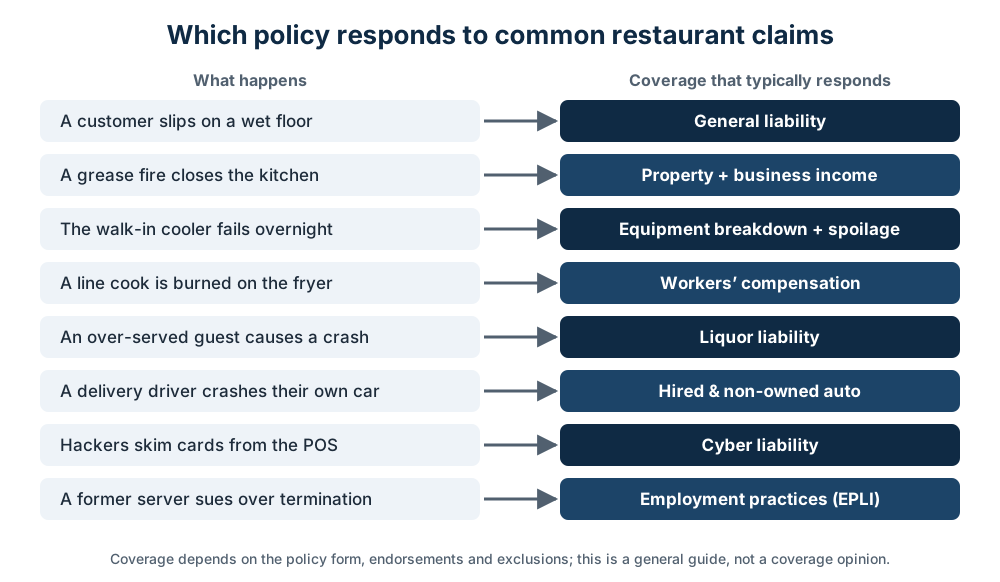
- General liability — slips, trips and guest injuries in a high-turnover dining room.
- Products-completed operations — illness and allergen claims from made-to-order meals.
- Tenant improvements and betterments — the build-out you paid for in a leased space.
- Business personal property and equipment breakdown — refrigeration, ovens, kiosks and POS hardware.
- Business income and spoilage — lost sales and food after an outage or covered loss.
- Cyber liability — card data, ordering platforms and ransomware.
- Hired and non-owned auto — catering drops and deliveries in employees’ cars.
- Liquor liability — for locations with a beer and wine license.
- Workers’ compensation — required from the first employee in Vermont.
Factors behind a fast casual quote
Carriers look at sales per location, payroll by class code, cooking methods, delivery and catering share, alcohol share, hours, the lease and building, cyber controls and prior claims. Multi-unit operators may be better served by one package covering every location than by separate policies.
Pricing improves with color-coded utensils and labeled allergen wells, entrance mats and a wet-floor routine, tokenized payment processing and multi-factor login, a written driver policy for catering runs, and a documented food safety program.
Shopping one application across many carriers
Provident Financial Group is an independent agency licensed in Vermont. We take one application, compare multiple carriers side by side, and check each quote against your lease. After binding, you can send live certificates of insurance to landlords and catering clients. Call (866) 964-6660. Coverage is subject to underwriting and policy terms.
Frequently asked questions
Does a Vermont fast casual restaurant need liquor liability for beer and wine only?
Yes, if you hold a license covered by Vermont’s statute. Beer and wine service creates the same dram shop exposure as a full bar, and the state now ties licensing to carrying the coverage.
What is tenant improvements coverage?
It covers the build-out you paid for in a leased space, like counters, lighting and flooring, which the landlord’s policy usually does not.
Can one policy cover all of my Vermont locations?
Usually. A package policy can schedule several locations, often with shared limits and one renewal date.
Do I need cyber coverage if my POS provider handles payments?
Your provider’s contract rarely covers your notification costs or business interruption, so cyber coverage is still worth pricing.
Opening or expanding in Vermont? Get Multiple Quotes within minutes.