
Delis and sandwich shops in South Carolina typically need general liability with products coverage for food contamination claims, property with equipment breakdown and spoilage for deli cases and walk-ins, workers’ compensation once four or more people are employed (slicer injuries make this a big one), and hired and non-owned auto if staff deliver catering trays. Near the coast, confirm how wind is covered.
We are talking about neighborhood delis, sub and hoagie shops, gourmet sandwich counters, and deli-markets that sell sliced meats and cheeses by the pound, from Spartanburg and Aiken to Summerville and Hilton Head. The work is fast, knife-and-slicer heavy, and built around perishable inventory, and the insurance should reflect that.
Where South Carolina law touches a deli
Delis are retail food establishments permitted by the South Carolina Department of Agriculture’s Retail Food Safety program under Regulation 61-25. At least one employee who directs food preparation and service must be a certified food protection manager. For a deli, that means someone owns the cold-holding logs, slicer sanitation schedule and ready-to-eat meat handling that underwriters and inspectors both care about.
Workers’ compensation is mandatory when you regularly employ four or more people, counting part-time staff and family members. A small owner-run deli with two helpers may fall under the threshold, but the owner should still weigh whether to buy it, because a single slicer injury can cost more than years of premium. Sole proprietors and partners can elect coverage for themselves. More in our South Carolina workers’ comp guide.
If you run office catering in your own vehicle, South Carolina’s minimum is 25/50/25 (in thousands of dollars) with matching uninsured motorist coverage. Along the coast, the South Carolina Wind and Hail Underwriting Association is the residual market for wind and hail in counties including Beaufort, Charleston, Colleton, Georgetown and Horry, so a Bluffton or Myrtle Beach deli may see wind written separately.
Deli risks, from the slicer to the sandwich tray
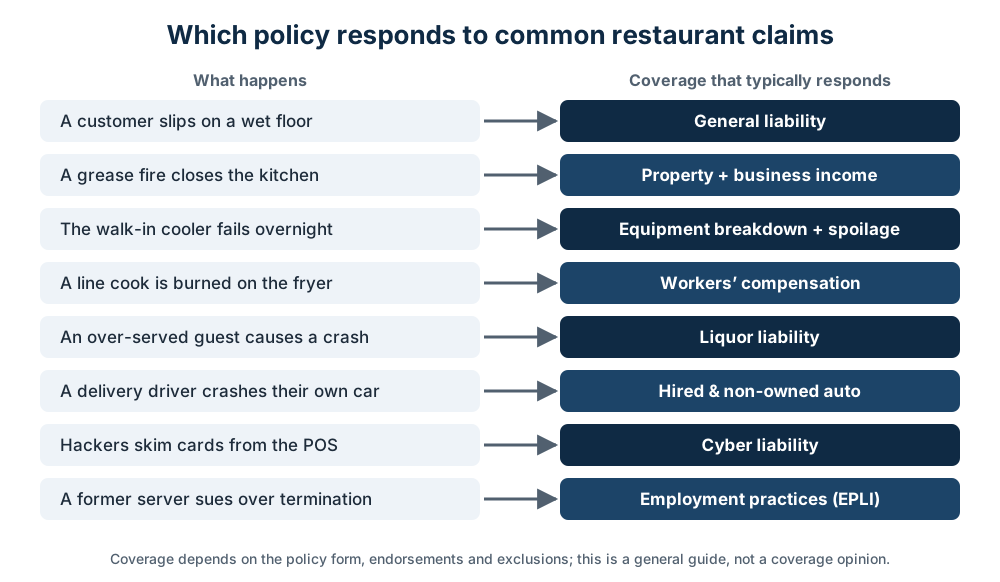
The meat slicer is the most dangerous machine in the building. A new hire cleaning the blade without the guard in place, or reaching for the last few slices of prosciutto, can suffer a serious laceration that means surgery and weeks off work. That is a workers’ comp claim, and carriers pay close attention to slicer training and cut-resistant gloves.
Perishables are the property side. A summer thunderstorm knocks out power to a block in Columbia for eighteen hours, and a deli case full of sliced turkey, roast beef and imported cheese has to be thrown out. Spoilage coverage, and whether your policy includes off-premises utility interruption, decide whether you recover that inventory. A failed condenser on the walk-in does the same damage on a normal day.
Ready-to-eat meats carry contamination risk. A batch of chicken salad held too warm on a catering tray for a Greenville office lunch sickens several employees, and their employer’s HR department is asking questions by afternoon. Products-completed operations coverage responds. At the counter, ice from a drink cooler on tile floors creates slip claims, and a staff member dropping off trays in a personal car brings hired and non-owned auto into play.
Deli insurance checklist for South Carolina owners
- General liability — covers customer slips at the counter and damage at clients’ offices during catering drop-off.
- Products-completed operations — defends illness and allergen claims from sandwiches, salads and sliced meats.
- Commercial property — insures slicers, deli cases, walk-ins, ovens and your build-out.
- Equipment breakdown — pays for compressor and electrical failures on refrigeration.
- Spoilage and utility interruption — replaces meat, cheese and prepared salads lost to outages.
- Workers’ compensation — required at four or more employees and critical given slicer injuries.
- Hired and non-owned auto — protects the business when staff deliver trays in personal cars.
- Business income — covers lost earnings during repairs after a covered loss.
What drives deli insurance costs
Rating starts with annual sales, square footage, building construction and location. Carriers then consider whether you cook (a flat-top or fryer under a hood versus cold prep only), the value of refrigerated inventory, catering share and delivery method, payroll by class, and your claims history. Coastal buildings and older electrical systems can affect property pricing.
You can improve your profile with documented slicer training, cut-resistant gloves at every station, a written cleaning procedure that requires unplugging the slicer, temperature alarms on coolers, a generator plan or ice supply arrangements for outages, insulated carriers and time stamps for catering trays, and a short list of approved drivers.
One application, several carriers
Provident Financial Group is an independent agency. You complete one application, we compare multiple carriers quoted through our agency, and you review the options side by side, including spoilage limits and equipment coverage. Certificates for landlords and corporate catering clients are issued once you bind. Call (866) 964-6660 with questions.
Frequently asked questions
Does a small South Carolina deli with three employees need workers’ comp?
Employers with fewer than four regularly employed people are generally exempt, but part-time and family workers count toward that number, and many small delis buy it anyway because of slicer injuries.
Is spoilage from a power outage covered?
Only if your policy includes spoilage and, for outages that start off your premises, utility service interruption. Check both.
Our corporate catering clients want a certificate. Can you provide one?
Yes. Once coverage is bound we issue certificates, including additional insured wording if a client requires it.
Does general liability cover a customer who got sick from a sandwich?
That is typically handled under the products-completed operations part of general liability, subject to policy terms.
Want to compare? Get Multiple Quotes within minutes.