
Ghost kitchens in Connecticut typically need product and general liability that names every virtual brand they sell under, hired and non-owned auto for any delivery done by their own staff, property and equipment breakdown for high-volume cooking equipment, cyber coverage for online ordering, and workers’ compensation, which Connecticut requires of every employer regardless of size.
This guide is for delivery-only operators: restaurants running virtual brands from an existing kitchen, tenants in shared commissary or kitchen-rental facilities, and operators who cook for third-party apps without a dining room. The risk is concentrated in the kitchen, the delivery chain and the contracts. The national ghost kitchen insurance page covers the concept in general.
Connecticut rules that still apply without a dining room
No storefront does not mean no permit. Your local health director issues the food establishment permit and inspects under the Connecticut Food Code, the FDA Food Code as fully adopted statewide since February 17, 2023. Class 2, 3 and 4 establishments must employ a certified food protection manager and designate an alternate person in charge, which covers most kitchens cooking full menus for delivery.
Workers’ compensation is required for every employer under Conn. Gen. Stat. § 31-284(b), with no employee minimum. Carriers are private; there is no state fund, and NCCI administers the residual market. If you employ drivers, remember Connecticut’s minimum auto liability limits of 25/50/25 (in thousands of dollars) and uninsured/underinsured motorist coverage of at least 25/50 (in thousands) apply to any owned vehicles.
Shared-kitchen leases and platform agreements
Kitchen-rental facilities and commissaries usually require tenants to carry liability at stated limits, name the facility as additional insured and provide a waiver of subrogation. Delivery platforms have their own insurance terms. Read both before binding: a policy that fits a traditional restaurant may not satisfy a facility’s lease, and a missing endorsement can hold up your move-in date.
One detail that trips up virtual operators: every brand name you sell under should appear on the policy as a named insured or trade name. If a customer sues “Midnight Wings” and your policy only lists your LLC and your original restaurant name, you want no confusion about whether the claim is covered.
Claim scenarios specific to delivery-only kitchens
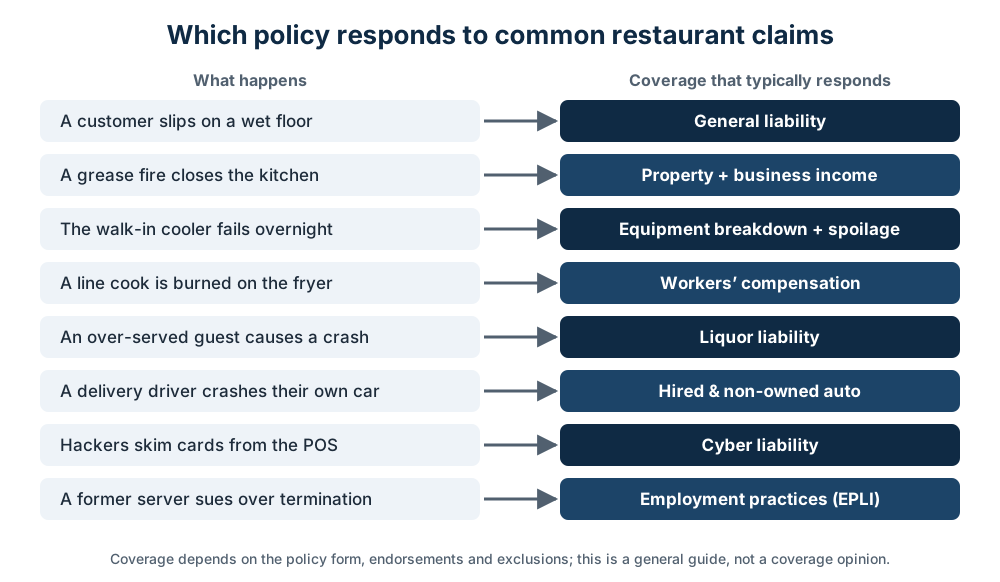
Volume is the defining risk. A kitchen pushing hundreds of orders a night through fryers and charbroilers runs hot, and a grease fire in a shared facility can damage neighboring tenants’ equipment, prompting a claim against you. Packaging is another: a delivered order arrives with a tamper seal broken and the customer blames your kitchen for an illness, or an allergen-free item from one brand is cross-contaminated by prep for another brand sharing the same line.
Technology creates exposure as well. A compromised tablet or ordering integration can leak customer data or divert payouts. When the power goes out during an ice storm in Hartford, you lose not only the walk-in but a night of orders across every brand. Your staff face the usual kitchen injuries, and in-house drivers face road risk every shift.
Coverage checklist for Connecticut virtual brands
- General liability with products coverage — responds to illness, allergen and foreign-object claims on delivered food, for every brand listed.
- Hired and non-owned auto — protects the kitchen when employees deliver in their own vehicles.
- Commercial auto — needed for any kitchen-owned delivery vehicle; consider limits above state minimums.
- Commercial property and tenant improvements — covers your equipment and build-out inside a rented or shared kitchen.
- Equipment breakdown and spoilage — pays for failed fryers, hoods and walk-ins and the inventory lost with them.
- Business income — replaces lost order revenue after a covered fire or outage.
- Cyber liability — helps with data breaches, ordering-system fraud and notification costs.
- Workers’ compensation — required for all Connecticut employers and covers burns, cuts and driver injuries.
What carriers price in a ghost kitchen
Underwriters look at total sales across brands, cooking methods and fire suppression, whether you are a tenant in a shared facility or operate your own space, how delivery is handled (third-party, in-house drivers or both), payroll by class and loss history. New concepts without history can be written, but clear descriptions of each brand and the kitchen layout help.
To help your pricing, keep hood and suppression service records, separate allergen prep, use tamper-evident packaging, limit in-house driving to vetted drivers with clean records, and use multi-factor login on ordering accounts.
Getting quotes for a virtual restaurant
Provident Financial Group is an independent agency: one application, multiple carriers compared side by side. We also turn around certificates of insurance with the additional insured and waiver language your kitchen facility requires. Call (866) 964-6660. Coverage is subject to underwriting and policy terms. See our Connecticut restaurant insurance page and Connecticut restaurant workers’ compensation guide for more.
Frequently asked questions
Do I need a separate policy for each virtual brand?
Not usually. Most operators list each brand as a trade name on one policy; what matters is that every name customers see appears on it.
What does a shared kitchen mean by waiver of subrogation?
It means your insurer gives up the right to recover from the facility after paying your claim. It is added by endorsement, and we confirm the carrier allows it.
Are third-party app drivers covered by my policy?
App drivers are typically covered under the platform’s arrangements, not your auto policy. Your own employees who deliver are where hired and non-owned auto comes in.
Does a delivery-only kitchen need a food protection manager?
If your local health director classifies the kitchen as Class 2, 3 or 4, Connecticut law requires one, and most full-menu kitchens fall in those classes.
Launching a new brand or moving into a shared kitchen? Get Multiple Quotes within minutes.