
Fast food restaurants in Indiana typically need general liability built for high customer counts, workers’ compensation from the first employee, property and equipment breakdown for fryers and drive-thru systems, and hired and non-owned or commercial auto if you deliver. Because many locations are franchised and open late, franchisor minimums, landlord lease terms and crime coverage for cash-heavy shifts round out the program.
This page is for quick-service operators across Indiana: burger, chicken and taco drive-thrus near interstate exits on I-65, I-69 and I-70, independent walk-up stands, and multi-unit franchisees. Speed, fryers, cash and long hours define the business and the insurance.
Indiana rules and contracts behind a quick-service program
Most fast food kitchens cook raw animal foods, so Indiana requires a certified food protection manager to be responsible for all hours of operation. For a late-night or round-the-clock drive-thru, that means planning manager coverage across every shift. If you buy an existing location, as a new owner you have six months to comply, and a departing certified manager must be replaced within three months.
Workers’ compensation applies from the first employee because IC 22-3-5-1 sets no minimum headcount. Operating without it is a Class A misdemeanor, the Worker’s Compensation Board can seek a court injunction, and failing to show compliance when the Board asks brings a daily civil penalty that can be waived if you comply within 20 days. If you run your own delivery cars, they must carry at least 25/50/25 (in thousands of dollars) in liability.
Contracts usually matter as much as statutes here. Franchise agreements set minimum limits, require the franchisor to be named as additional insured and often demand advance notice of cancellation. Ground leases and pad-site leases add their own indemnity and insurance clauses.
Drive-thru, fryer and late-night exposures
The fryer station produces the most painful claims: a crew member filtering oil at the end of the night, a basket dropped too fast, or a slick film on the floor that sends someone sliding into the hot zone. A grease buildup in the hood that has not been cleaned on schedule can turn a flare-up into a kitchen fire and a two-week closure.
The drive-thru adds its own list. A cup of coffee passed through the window pops its lid into a driver’s lap. A pickup truck misjudges the turn and takes out the menu board and canopy post. Ice builds up in the lane overnight after a freezing rain and a customer walking to the window falls. After midnight, an armed robbery at the register, or a fight between customers in the parking lot, can lead to both injury claims and crime losses.
Fast food coverage checklist for Indiana locations
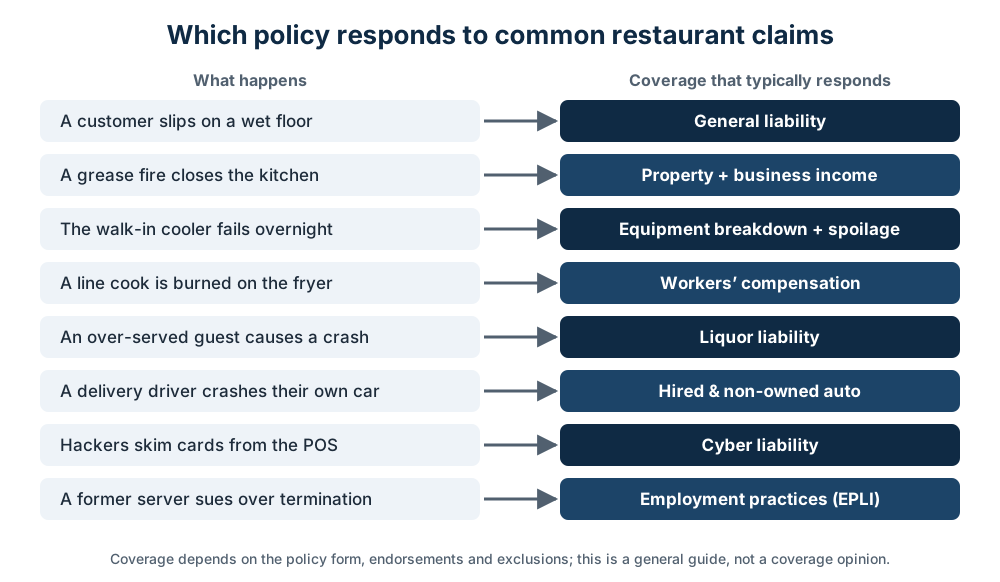
- General liability with products-completed operations — slips, burns at the window, foreign objects and foodborne illness.
- Property with outdoor sign coverage — menu boards, pylon signs and canopies are often limited unless specifically scheduled.
- Business income — keeps payroll and rent covered while a fire-damaged kitchen is rebuilt.
- Equipment breakdown — fryers, walk-ins, drive-thru headsets and POS systems.
- Workers’ compensation — burns, slips and lifting injuries, with no minimum employee count in Indiana.
- Crime — robbery, safe burglary and employee theft for cash-heavy late shifts.
- Hired and non-owned or commercial auto — for delivery drivers and bank runs.
- Employment practices liability and umbrella — high turnover brings more employment claims, and franchisors often require umbrella limits.
Cost drivers for quick-service restaurants in Indiana
Underwriters consider sales, hours of operation, drive-thru volume, the number of fryers, delivery activity, the location’s crime exposure, the brand and franchise system, building construction and sprinklers, and how often you have had claims. Frequency matters: many small burn and slip claims can weigh on pricing as much as one large loss.
Ways to improve your position include an oil-management system that reduces manual oil handling, a documented hood and duct cleaning schedule, drop safes and cash limits in the drawer, good lighting and cameras outside, and a snow and ice contractor that carries its own insurance and names you as additional insured.
Quoting multi-unit and single fast food locations
Whether you own one drive-thru or a dozen, Provident Financial Group submits one application to multiple carriers and lays the quotes out side by side against your franchise requirements. We can also issue certificates to franchisors and landlords as soon as coverage is bound. Call (866) 964-6660.
Frequently asked questions
Does restaurant insurance cover a robbery at the drive-thru?
Stolen money is typically covered under crime coverage, while injuries to employees fall under workers’ comp and injuries to customers under general liability. Check that your crime limits match the cash you actually hold overnight.
I am buying an existing franchise location. What do I need on day one?
New property, liability and workers’ comp policies in your name, meeting the franchisor’s minimums. As a new owner you have six months to meet Indiana’s certified food protection manager requirement.
Who pays when a customer’s car hits our canopy?
Your property policy can pay to repair your damage, and your carrier may then pursue the driver’s auto insurer. That is why sign and canopy limits on your policy matter.
If someone slips in an icy drive-thru lane, is the snow contractor responsible?
Possibly both of you are named in the suit. Require your contractor to carry general liability and name you as additional insured, and keep records of when the lane was cleared.
Opening a new unit or buying a location? Get Multiple Quotes within minutes.