
Ghost kitchens in Vermont typically need general liability with strong products coverage, hired and non-owned auto for any delivery done in employees’ cars, property and equipment coverage inside a leased or shared kitchen, cyber coverage for online ordering, and workers’ compensation from the first employee. Kitchen landlords and delivery platforms often set minimum limits in their contracts.
This page is for delivery-only and virtual restaurant brands operating in Vermont, whether you run several brands from one leased kitchen, rent shifts in a shared commercial kitchen, or cook from the back of an existing restaurant. With no dining room, the risk profile shifts toward the food itself, the vehicles and the contracts.
Vermont licensing, auto limits and contracts for delivery-only kitchens
A ghost kitchen is still a food service establishment in the eyes of the Vermont Department of Health’s Food and Lodging Program, which licenses and inspects establishments statewide. New operations must pass an opening inspection before cooking for the public. If several brands share one license, make sure every brand name also appears on the insurance policy as a named insured or trade name; a claim against an unlisted brand is an argument you do not want to have.
If your own employees deliver, Vermont’s minimum auto liability under 23 V.S.A. § 800 is 25/50/10 (in thousands of dollars), and personal auto policies commonly exclude paid delivery. Hired and non-owned auto protects the business when staff drive their own cars. When third-party app drivers deliver, read the platform agreement: many require the restaurant to carry specified liability limits and to indemnify the platform.
Workers’ compensation applies to any employer with one or more full- or part-time employees in Vermont; there is no small-employer exemption. See our Vermont restaurant workers’ compensation page.
Delivery-only loss scenarios
- Temperature abuse in transit. A chicken dish sits in a courier’s car for forty minutes during a busy Friday. Several customers become ill, and each claim names the brand on the bag, which is you.
- An allergen swap between brands. Two brands share one line; a peanut sauce from one menu ends up in a meal labeled nut-free on another. Products liability and a platform suspension follow.
- A staff delivery crash in a snowstorm. An employee using a personal car rear-ends another vehicle on an icy hill. The personal carrier disputes coverage because of the delivery use.
- A frozen sprinkler line in a shared building. A pipe bursts in the commercial kitchen during a January cold snap, damaging your equipment and shutting every brand down at once.
- A hacked ordering account. A compromised login redirects payouts or exposes customer data from your direct-order site.
- A lease indemnity clause. The kitchen owner is sued after a fire starts in your station, and the lease makes you responsible for defending them.
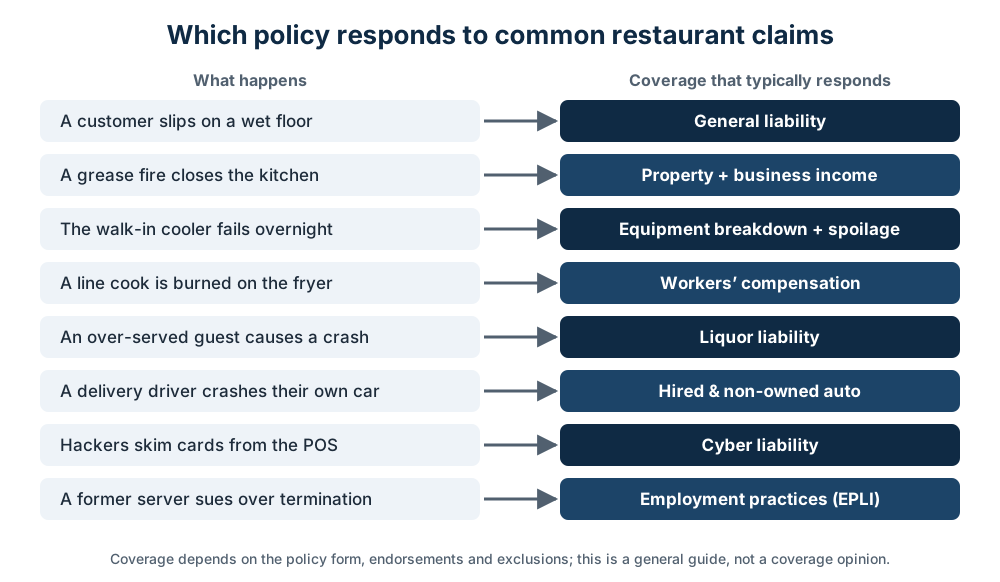
Coverage stack for a Vermont ghost kitchen
- General liability with products-completed operations — the main defense against illness and allergen claims from delivered food.
- Hired and non-owned auto — for employees delivering in their own vehicles.
- Commercial auto — if the business owns a delivery vehicle.
- Business personal property and equipment breakdown — your ranges, fryers, refrigeration and smallwares inside someone else’s building.
- Tenant improvements and betterments — upgrades you paid for in a leased kitchen.
- Business income — lost revenue for every brand if the kitchen is shut down after a covered loss.
- Cyber liability — online ordering, stored customer data and payment disruptions.
- Workers’ compensation — required from the first employee in Vermont.
How carriers underwrite virtual restaurant brands
Underwriters look at total sales across all brands, the menu (fried and raw items rate higher), whether you or third parties deliver, driver count and records, the kitchen’s fire protection, lease terms, and loss history. Brand-new concepts with no history are common and insurable; a clear operations description helps.
To improve your pricing: use tamper-evident packaging, keep separate allergen prep areas and labeling for each brand, set a written driver policy if staff deliver, document hood cleaning and suppression inspections, and turn on multi-factor authentication for every ordering and payment account.
Comparing carriers through Provident Financial Group
Provident Financial Group is an independent agency licensed in Vermont. We take one application that lists every brand, compare multiple carriers side by side, and flag differences in products, auto and cyber terms. After binding, you can send live certificates of insurance to your kitchen landlord or delivery platform. Call (866) 964-6660. Coverage is subject to underwriting and policy terms.
Frequently asked questions
Do I need a separate policy for each virtual brand?
Usually not. One policy can list multiple trade names, as long as every brand is disclosed on the application and shown on the policy.
Are third-party app drivers covered by my ghost kitchen’s insurance?
App drivers are generally the platform’s contractors, not your employees, but you can still be named in a crash suit. Hired and non-owned auto and your platform agreement determine how that plays out.
Does my shared kitchen’s insurance cover my equipment?
Typically not. The building owner insures the building; your equipment, inventory and liability are yours to insure.
Is cyber insurance worth it for a delivery-only restaurant?
If you take direct online orders or store customer data, cyber coverage addresses breach response and payment disruption that a general liability policy does not.
Launching or expanding a delivery-only brand in Vermont? Get Multiple Quotes within minutes.