
Delis and sandwich shops in Kansas typically need general liability with products coverage for ready-to-eat meats and salads, spoilage and equipment breakdown for display cases and walk-ins, business income, workers’ compensation once gross annual payroll passes $20,000, and hired and non-owned auto if staff deliver catering trays. Slicer injuries and cold-chain failures drive most of the losses.
This page is for Kansas delis, sub and sandwich shops, bagel-and-sandwich counters and small grocery delis, whether you are a family-run spot in Emporia or a franchise unit near a Lenexa office park that does as much catering as walk-in business.
State requirements a Kansas deli should know
Delis are licensed as food establishments by the Kansas Department of Agriculture’s Food Safety & Lodging program. KDA does not require a certified food protection manager statewide but recommends one, and local jurisdictions may add requirements. For a deli, where sliced meats and prepared salads are held cold and served without further cooking, a trained manager and a written temperature log are exactly what underwriters want to see.
The Kansas Department of Labor requires workers’ compensation once gross annual payroll exceeds $20,000 in a calendar year; subcontractors do not get the small-payroll exemption. A deli with a slicer operator, a counter person and a catering driver will almost always be over the line. Read more on our Kansas workers’ comp page for restaurants.
If you sell beer by the bottle or pour it on site, KDOR’s Division of Alcoholic Beverage Control handles licensing. Kansas has no dram shop statute, but landlords often require liquor coverage. For catering vans you own, Kansas requires 25/50/25 liability (in thousands of dollars) plus PIP and uninsured/underinsured motorist coverage. Storm exposure matters too: the Kansas Insurance Department warns about damaging wind and hail, and rising-water flood needs separate NFIP coverage.
Slicers, cold cases and catering trays: deli risk scenarios
The meat slicer is the signature deli hazard. An employee cleaning the blade without the guard in place loses the tip of a finger; it is one of the more serious and costly workers’ comp claims a small shop sees. Knife cuts during prep and strains from lifting cases of product round out the employee side.
On the customer side, ready-to-eat foods carry contamination risk. A batch of chicken salad held too long in a case that was running warm makes several office workers sick after a catered lunch, and the employer’s HR department calls you before their lawyers do. Mislabeled allergens in a pre-made wrap, a bone fragment in a sliced ham or a customer who slips on ice tracked in from a January storm are the other common claims.
Property losses tend to arrive as refrigeration problems. A deli case compressor fails on a Saturday afternoon, or a summer thunderstorm knocks out power overnight and the walk-in loses temperature. Without spoilage coverage, that inventory is simply gone.
Recommended policies for Kansas sandwich shops
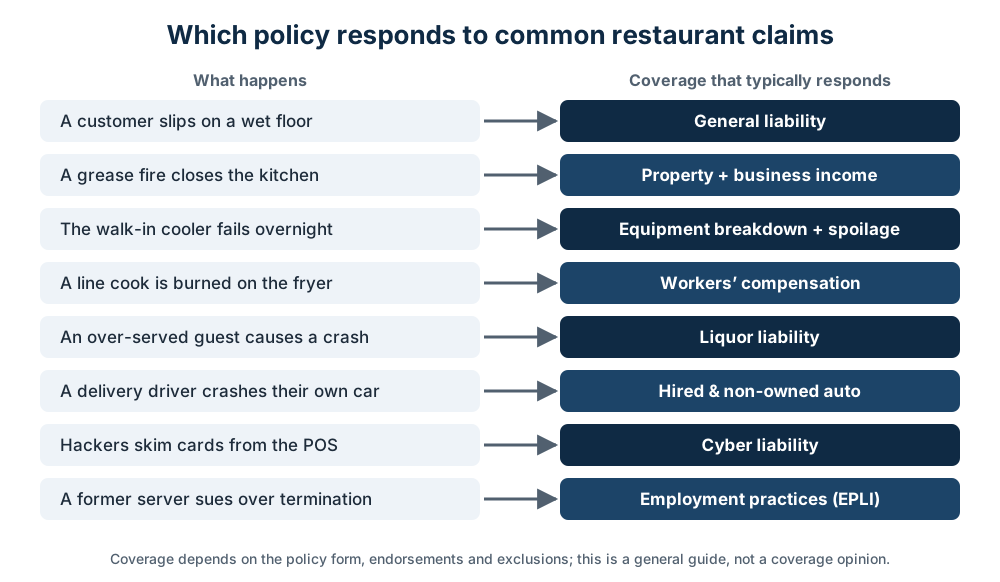
- General liability — customer slips, trips and injuries at the counter and seating area.
- Products liability — illness, allergen and foreign-object claims from ready-to-eat meats, salads and catering orders.
- Commercial property — slicers, display cases, ovens, furniture and improvements.
- Spoilage — stock lost to a case failure or utility outage.
- Equipment breakdown — compressors, deli cases and walk-in systems.
- Business income — lost profit during a covered shutdown.
- Workers’ compensation — required above the Kansas payroll threshold; slicer injuries are costly.
- Hired and non-owned auto — employees delivering catering in their own cars.
- Food contamination coverage (optional) — cleanup and lost income after a contamination event or health department closure.
What changes the price of deli insurance
Underwriters look at annual sales, the split between counter, catering and delivery, payroll by role, whether any cooking is done under a hood, alcohol sales, building details, and claims history. A shop that does heavy corporate catering will be asked more about vehicles and food handling off site.
To present a better risk, keep slicer guards on and require cut-resistant gloves for cleaning, log case and walk-in temperatures, label allergens on every prepared item, use a written catering hold-time policy, and maintain your refrigeration equipment on a schedule. A clean loss history with your prior carrier helps the most.
One application, several carriers for your deli
Provident Financial Group is an independent agency. You fill out one application, we request quotes from multiple carriers and compare them side by side, and after you bind we issue live certificates of insurance for your landlord, corporate catering clients or franchisor. Reach us at (866) 964-6660.
Frequently asked questions
Does workers’ comp cover a slicer injury at my Kansas deli?
Yes, workplace injuries like slicer cuts are what workers’ comp is for, and Kansas requires it once payroll exceeds the state threshold. Without it, the business can face KDOL fines and the injured worker’s costs.
Are corporate catering orders covered by my deli policy?
Catering is usually covered as part of your operations if it is disclosed on the application. Clients may ask for a certificate naming them as additional insured.
What happens if the health department closes my deli after an illness complaint?
A standard policy may not pay for lost income from a health department closure. Food contamination coverage is designed for that situation.
Do I need liquor liability if I only sell bottled beer?
Kansas does not require it by statute, but your landlord might, and it defends alcohol-related claims. It is often inexpensive to add for low alcohol sales.
Want to see how carriers compare for your shop? Get Multiple Quotes within minutes.