Ghost kitchens, cloud kitchens, virtual brands, delivery-only concepts: whatever you call them, they have become a permanent part of the restaurant landscape. Some operators run them out of a shared commissary. Others carve out space in an existing restaurant and launch a second brand that exists only on delivery apps. A few lease a dedicated production facility with no storefront at all.
The business model is lean, but the risk profile is not simply “a restaurant minus the dining room.” Some exposures shrink, some grow, and a few are entirely new. This article walks through how underwriters tend to look at delivery-only operations and where owners often find gaps.
The Exposures That Shrink (and the Ones That Don’t)
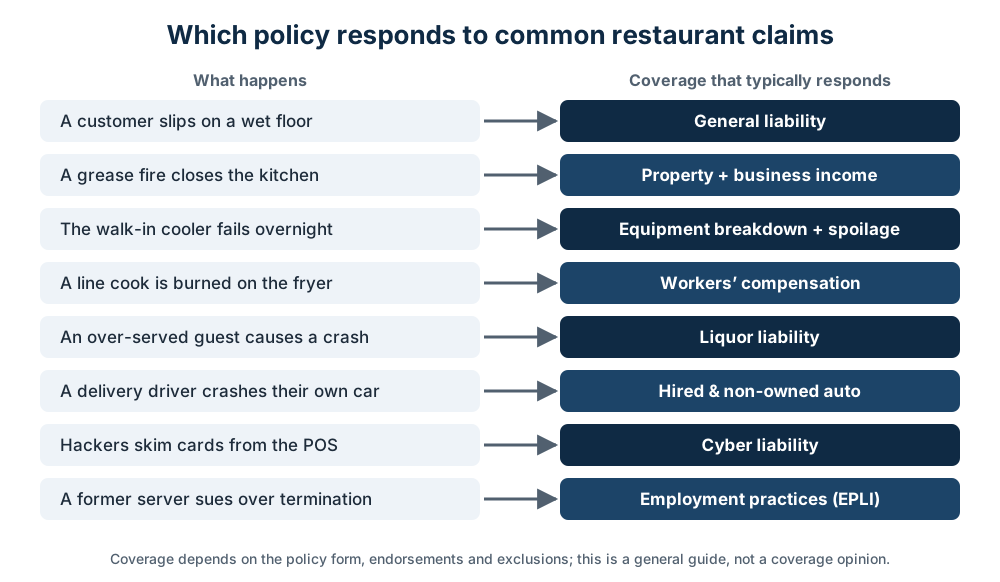
Without a dining room, you have no guests slipping on a wet floor, no patrons choking on a fish bone at table six, and typically no liquor service. That removes a large slice of the premises liability that drives general liability pricing for a traditional restaurant. Underwriters usually recognize this, and a delivery-only concept may be classified differently than a full-service restaurant.
What does not shrink is the food itself. Every order you send out carries the same foodborne illness and allergen exposure as a plated meal, and arguably more, because you have no control over how long the food sits in a driver’s car. Products-completed operations coverage, which is the part of a general liability policy that responds to injury caused by food after it leaves your hands, becomes the heart of your liability program rather than a secondary consideration.
Kitchen fire risk is also unchanged, and in a shared facility it may be higher. A commissary with a dozen operators running fryers and flat-tops in close quarters has more ignition sources and more people who may not follow the same hood-cleaning schedule you do.
Shared Kitchens: Whose Insurance Covers What
If you rent time or space in a commissary or shared kitchen, read the license agreement carefully. Most operators will find that the facility’s insurance covers the building and the facility’s own operations, not yours. The agreement typically requires each tenant to carry its own general liability policy, often with the facility named as an additional insured, and sometimes a minimum limit that is higher than you would otherwise buy.
Your business personal property, meaning your smallwares, specialty equipment, packaging inventory, and food, is usually your responsibility as well. If a fire started by another tenant destroys your inventory, you may be looking to your own policy first and pursuing the other party later. A property policy or business owner’s policy with a realistic contents limit matters even when you own very little.
Ask the facility for a certificate of its own insurance too. If a landlord or commissary operator is thinly insured, an incident that shuts down the whole building could leave every tenant fighting over a small pool of money.
Running a Virtual Brand Out of an Existing Restaurant
Many restaurant owners launch a second or third brand out of their existing kitchen. The wings concept and the smash-burger concept may both come out of the same line as the main menu. From an insurance standpoint, the question is whether your current policy knows about it.
Policies are written based on described operations and estimated sales. If a virtual brand adds meaningful revenue, your premium basis changes, and an audit may pick that up. More importantly, if the new brand operates under a different legal entity or a different trade name, that entity may not be a named insured on your policy. A claim filed against “Midnight Wings LLC” may not be covered by a policy issued to “Main Street Bistro Inc.” unless the second entity has been added. This is one of the most common and most avoidable gaps in multi-brand operations.
Delivery Is the Whole Business, So Auto Matters More
A traditional restaurant might treat delivery as a side channel. For a ghost kitchen, it is the only channel, which means the auto exposure deserves a closer look.
If you rely entirely on third-party apps, your direct auto exposure is limited, but not zero. Employees who occasionally run to the restaurant supply store or pick up a missing ingredient in their own cars create a hired and non-owned auto exposure that a general liability policy typically does not cover. If you employ your own drivers, you are into commercial auto territory, and personal auto policies generally exclude delivery use.
Also consider the contractual side. Delivery platform agreements often contain indemnification language that shifts responsibility for food quality issues, packaging failures, and even certain customer disputes to the restaurant. Your policy may or may not respond to contractual obligations you have taken on, so it is worth having an agent review the platform terms alongside your coverage.
Cyber and Platform Dependence
A ghost kitchen is, in many ways, a technology business that happens to cook. Orders arrive through tablets and integrations, customer data flows through multiple platforms, and a system outage can stop revenue instantly.
Cyber liability coverage may help with data breach response and, depending on the form, with certain business interruption losses caused by a cyber event. Note, however, that many cyber policies are more limited when the outage occurs at a third-party platform rather than on your own systems. Dependent business interruption for technology providers is a specific coverage question, and answers vary widely between carriers.
Equipment, Spoilage, and Business Income
Because a ghost kitchen has very little margin for downtime, equipment breakdown and spoilage coverages punch above their weight. A failed walk-in on a Friday afternoon can wipe out a week of prep. Business income coverage, including any extra expense provision that would let you temporarily rent space elsewhere, deserves the same attention a dining-room restaurant would give it, perhaps more, since you have no bar sales or catering to fall back on.
Talk Through the Model Before You Buy
Ghost kitchens are still relatively new to many underwriters, and how a policy is classified and structured can differ significantly from one carrier to the next. Describing your model accurately, including who owns the space, which entities operate which brands, how food gets to the customer, and which platforms you depend on, is the foundation for getting coverage that actually fits.
An independent agent who works with restaurants regularly can help you compare how different carriers approach delivery-only operations and make sure that the entities, locations, and exposures on the policy match the business you are actually running.