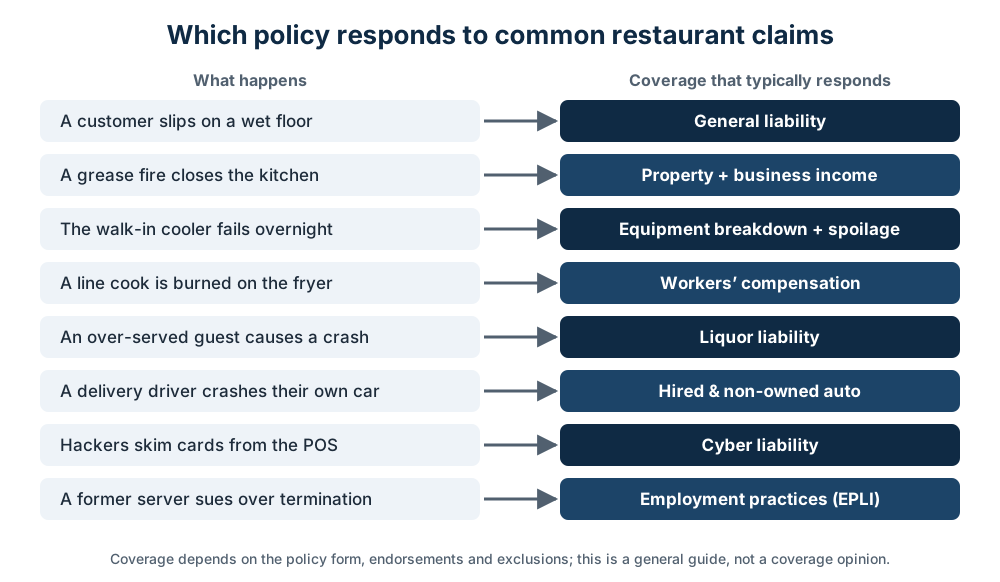
Ask most restaurant owners what keeps them up at night and they will mention a kitchen fire, a slip-and-fall, or a bad health inspection. Fewer will mention an employment claim. Yet hospitality is consistently one of the industries where employment-related complaints are most common, for reasons built into the business itself: high turnover, young workforces, tip-based pay, late nights, alcohol, and managers who were promoted for their cooking or hustle rather than their HR training.
Employment practices liability insurance, usually called EPLI, is the coverage designed for this exposure. This article explains what it typically covers, why restaurants face these claims so often, and what to look for when you buy it.
What EPLI Generally Covers
EPLI is designed to respond when a current, former, or prospective employee alleges that your business violated their employment rights. Common allegations include discrimination on the basis of a protected characteristic, sexual harassment and hostile work environment, wrongful termination, retaliation for complaining or for taking protected leave, and failure to hire or promote.
Policies typically pay for defense costs, which are often the largest part of a claim even when the allegation is weak, as well as settlements or judgments up to the policy limit. Many forms also cover claims brought by third parties such as customers or vendors who allege harassment or discrimination by your staff, though that is often an optional extension rather than a default feature.
General liability policies almost universally exclude employment-related claims. Workers’ compensation covers injuries, not employment disputes. Without EPLI, most restaurants are self-insuring this entire category.
Why Restaurants See So Many Employment Claims
Several features of restaurant work push the claim frequency up.
The workforce skews young and turns over quickly, which means a steady stream of departures, and every departure is a potential wrongful termination or retaliation complaint. Tip pooling and tip credit rules are complex and vary by state, so wage disputes are common. Schedules change constantly, which creates friction around predictive scheduling laws in the jurisdictions that have them. Alcohol is present in the workplace, staff parties, and after-shift gatherings, which is a well-known ingredient in harassment complaints.
Managers are typically promoted from within with little or no formal training on how to handle complaints, document performance issues, or conduct a termination. A well-intentioned but poorly handled firing is one of the most common paths to a claim.
Wage and Hour: The Exclusion to Understand
The most important thing to understand about restaurant EPLI is how it handles wage and hour claims. Allegations of unpaid overtime, off-the-clock work, improper tip pooling, misuse of the tip credit, and misclassification of employees are among the most frequent employment claims in hospitality.
Most standard EPLI policies exclude wage and hour claims entirely, or cover only defense costs up to a small sublimit. Some carriers offer a broader wage and hour endorsement, sometimes with a meaningful defense sublimit, and a handful offer coverage for the actual back-pay amounts, though that is rare and usually expensive.
Read this section of any quote carefully. A restaurant that assumes its EPLI covers a tip-pooling class action may be surprised to find it does not.
Harassment Claims and the Role of Policies and Training
Carriers underwriting EPLI for restaurants pay close attention to what the operator has in place. An employee handbook with a clear anti-harassment policy, a defined complaint procedure with more than one reporting channel, documented harassment training for managers and staff, and consistent written documentation of discipline are the items underwriters typically want to see.
These are not just underwriting checkboxes. In many jurisdictions, having and following a reasonable complaint process can be part of an employer’s defense. Some carriers also offer risk-management resources, such as hotlines and template handbooks, as part of the policy. If you have not put these basics in place, the coverage may be harder to get or priced higher, and your defense may be weaker when a claim arrives.
Third-Party Coverage: Customers Complain Too
Restaurants interact with the public constantly, and third-party EPLI coverage addresses claims by non-employees alleging discrimination or harassment. A guest who claims they were refused service or treated differently because of a protected characteristic, or a delivery driver who alleges harassment by kitchen staff, can bring a claim that falls outside general liability and outside standard EPLI unless the third-party extension is included. For a business open to the public, it is worth asking about.
Claims-Made Timing and Prior Acts
EPLI is almost always written on a claims-made basis, which means the policy in force when the claim is made responds, provided the underlying conduct occurred after the policy’s retroactive date. When you first buy EPLI, the retroactive date is often set at the inception date, meaning conduct that happened before you bought the policy is not covered. When you switch carriers, you will want to preserve the original retroactive date so you do not create a gap. This is a detail worth confirming on every renewal.
How Restaurants Typically Buy It
EPLI is sometimes available as an endorsement on a business owner’s policy or package policy, which is convenient and often inexpensive, but the limits and terms can be thin. Standalone EPLI policies generally offer higher limits, broader definitions, and more flexibility on wage and hour and third-party coverage. Which is right depends on the size of your staff, your state’s employment law climate, and your own history.
An independent agent who understands hospitality can help you weigh the options, compare how different carriers treat wage and hour claims, and make sure your handbook and training line up with what underwriters expect. It is a conversation worth having before, not after, the first demand letter arrives.