
Ghost kitchen insurance covers the restaurant industry’s newest architecture: delivery-only brands, shared commissary kitchens, and virtual concepts running multiple menus from one line. Traditional restaurant policies assume dining rooms and walk-in customers — a ghost kitchen has neither, but adds shared-facility agreements, app-platform requirements, and a business that lives or dies on delivery liability. Very few insurance sites cover this well; underwriters are still catching up too, which makes carrier selection unusually decisive.
Coverage ghost kitchens and delivery-only restaurants actually need
General liability (adapted)
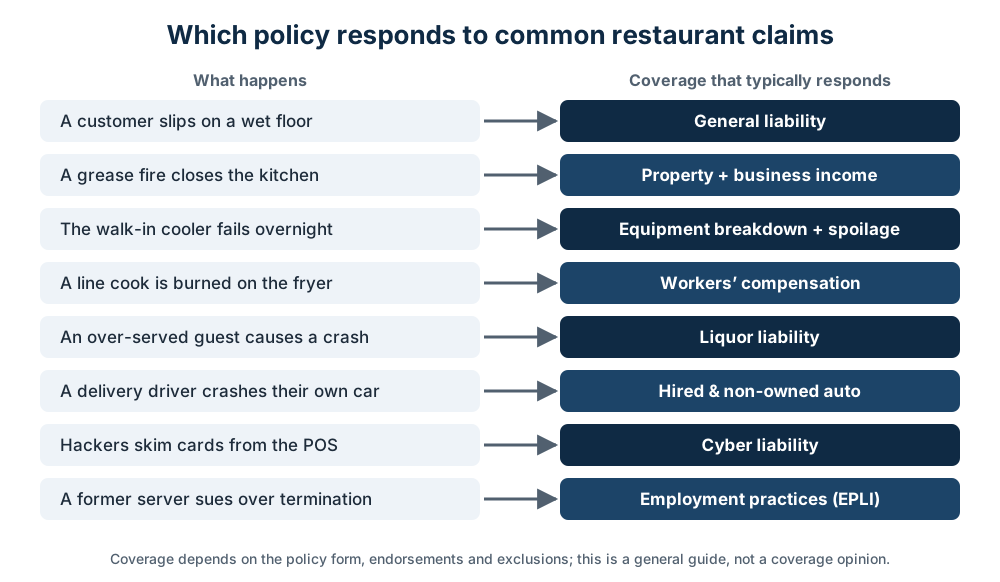
No dining room means minimal slip-and-fall — but foodborne-illness exposure scales with delivery volume, and shared-kitchen agreements demand proof of GL naming the facility. Your premises exposure is smaller; your product exposure isn’t.
Shared-kitchen contractual coverage
Commissary and ghost-kitchen facilities (CloudKitchens-style operators, shared commissaries) require tenants to carry specific limits and name the facility as additional insured — the lease is an insurance spec, and we build to it.
Delivery liability structure
If platforms deliver, their coverage carries the road risk; if you run your own drivers, hired & non-owned auto is essential. Multi-brand operations need the structure to match how each brand actually fulfills.
Property & equipment (BPP in shared space)
Your equipment inside someone else’s building — coverage written for tenant equipment in shared facilities, including business interruption if the facility itself goes down and takes your revenue with it.
Workers’ compensation
Line cooks and packers count like any kitchen staff — see our sister agency’s restaurant comp program. Multi-brand kitchens under one LLC keep one policy; separate entities need their own.
What ghost kitchen insurance costs
Every restaurant is priced individually — alcohol share, payroll, square footage, location, claims history and the limits you choose all move the number. The fastest way to see yours is a side-by-side quote: Get Multiple Quotes within minutes.
Market ranges for planning, not quotes — every operation prices individually on location, revenue, payroll, and history. Compare policy terms, limits, deductibles, and premiums when reviewing quotes.
What goes wrong: the claims that hit ghost kitchens and delivery-only restaurants
- Foodborne-illness claims at delivery scale — hundreds of orders a night, every one leaving your control at handoff
- Facility dependency — the shared kitchen’s fire is your interruption; coverage has to see through the lease
- Packaging and temperature failures — the delivery-lag claims traditional policies never contemplated
- Platform deactivation exposure — not insurable, but the concentration risk that makes interruption coverage on what is insurable more important
- Kitchen injuries — line burns and cuts at volume, same as any hard-working kitchen
Multi-brand structures and app requirements
Ghost kitchens multiply brands, not just orders — and insurance has to know whether “three brands” means three menus under one LLC (one policy, correctly described) or three entities (three named insureds or policies). Delivery platforms and facility operators each impose their own certificate requirements, and the descriptions on your policy need to match what you actually cook, or claims get contested. This is the newest corner of restaurant insurance — we structure it weekly, and the carriers that understand it price it dramatically better than the ones that don’t.
Ghost Kitchen insurance FAQs
Do ghost kitchens need less insurance than regular restaurants?
Different, and often somewhat less expensive — minimal premises exposure cuts GL costs, but product liability scales with delivery volume and shared-facility requirements add contractual specifics.Your real number depends on payroll, operations, and carrier appetite — comparing several quotes side by side is the only way to see it.
What insurance does a shared commissary kitchen require?
Facilities typically require $1M GL naming them as additional insured, proof of workers’ comp, and sometimes tenant property coverage — the lease is effectively an insurance specification, and your policy should be built to it.
Who covers delivery accidents for a ghost kitchen?
If third-party platforms deliver, their coverage carries the road risk. If you run your own drivers, you need hired & non-owned auto — the same make-or-break coverage as pizzerias.
Can one policy cover multiple virtual brands?
If the brands live under one legal entity and the policy describes the full operation, yes. Separate LLCs need separate coverage. Getting this wrong is the most common ghost kitchen claim complication.
Does insurance cover me if the shared facility shuts down?
Business interruption can be structured to respond when a covered loss at the facility stops your operation — critical when your entire revenue depends on someone else’s building staying open.
Get covered right: one application, multiple A-rated carriers that actually want ghost kitchens and delivery-only restaurants — start your quote. Related: Fast casual insurance · Pizzeria insurance · Catering insurance · all coverages · what restaurant insurance costs.
US Restaurant Insure connects food service business owners with Provident Financial Group. Insurance products are offered through Provident Financial Group, a licensed independent insurance agency, and are subject to underwriting approval, policy terms, conditions, and exclusions. Cost figures on this page are illustrative market ranges for planning purposes only — they are not quotes, offers of coverage, or guarantees of premium or savings. Coverage availability varies by state and carrier. Contact us at 1-866-964-6660 for a quote specific to your business.
Ghost Kitchen Insurance by state
- Ghost Kitchen Insurance in New Jersey
- Ghost Kitchen Insurance in New York
- Ghost Kitchen Insurance in Connecticut
- Ghost Kitchen Insurance in Vermont
- Ghost Kitchen Insurance in Ohio
- Ghost Kitchen Insurance in Michigan
- Ghost Kitchen Insurance in Virginia
- Ghost Kitchen Insurance in Pennsylvania
- Ghost Kitchen Insurance in Delaware
- Ghost Kitchen Insurance in Maryland
- Ghost Kitchen Insurance in North Carolina
- Ghost Kitchen Insurance in South Carolina
- Ghost Kitchen Insurance in Georgia
- Ghost Kitchen Insurance in Florida
- Ghost Kitchen Insurance in Texas
- Ghost Kitchen Insurance in Kentucky
- Ghost Kitchen Insurance in Kansas
- Ghost Kitchen Insurance in California
- Ghost Kitchen Insurance in Indiana
- Ghost Kitchen Insurance in Arizona
- Ghost Kitchen Insurance in Washington, DC
- Ghost Kitchen Insurance in Massachusetts
- Ghost Kitchen Insurance in Nevada